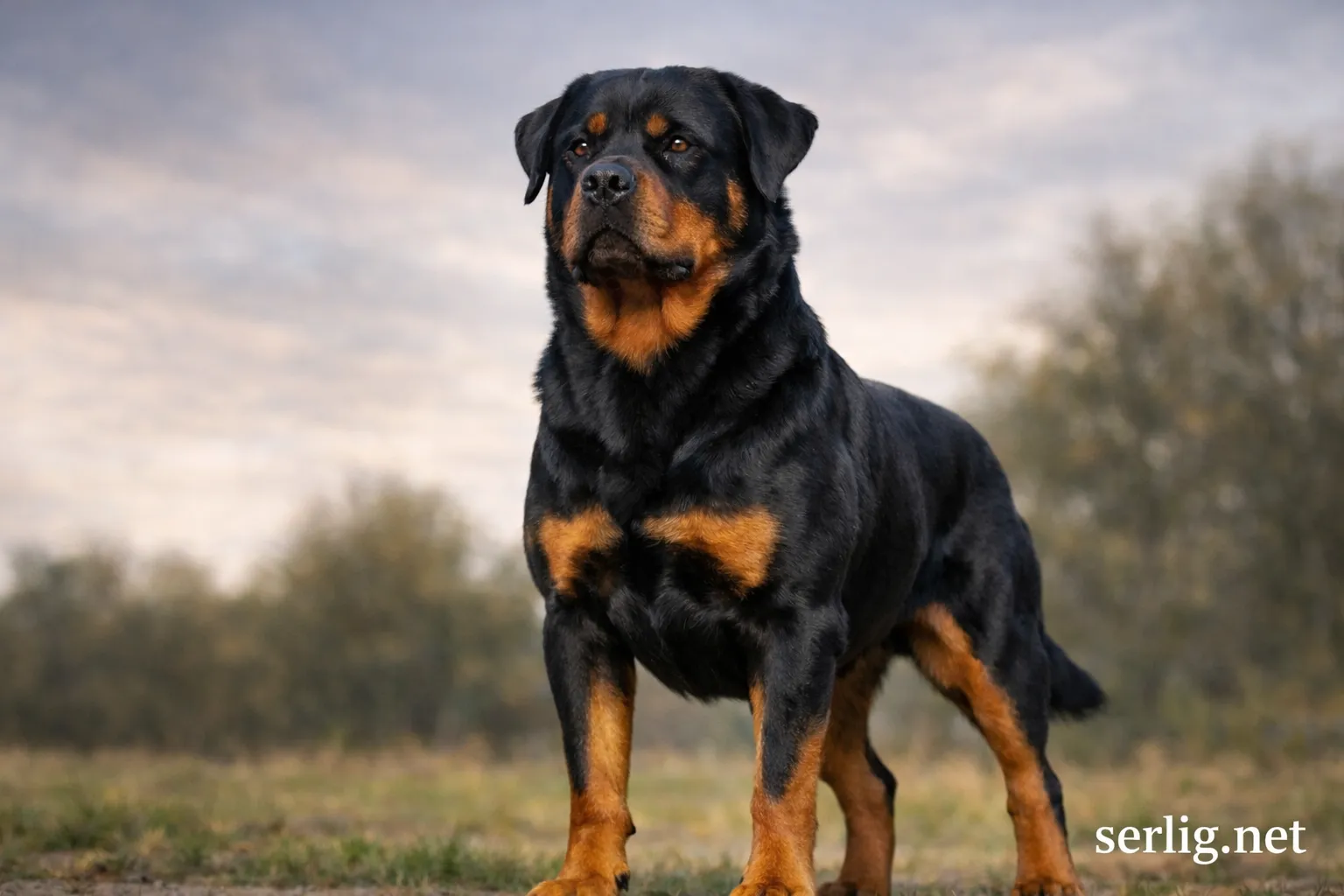
The Rottweiler is a powerful, intelligent, and loyal breed. Known for their striking appearance and impressive working abilities, Rottweilers stand out among other dog breeds. Their protective instincts, strength, and trainability make them an excellent choice for both working and companionship roles. Whether you’re a first-time dog owner or an experienced handler, a Rottweiler can be a remarkable addition to the family.
One of the key traits of Rottweilers is their intelligence. These dogs are often described as independent thinkers, which makes training both a challenge and a rewarding experience. With the right guidance, they can excel in various activities, from herding to protection work, and are also known for their natural ability to be excellent guard dogs. Their loyalty is another defining characteristic, making them affectionate and protective towards their families.
Overview of Their History and Origin
Rottweilers are an ancient breed with origins dating back to the Roman Empire. They were originally used to herd cattle and pull carts for butcher shops. The name “Rottweiler” comes from the town of Rottweil in Germany, where the breed was known for its work with livestock and its ability to pull carts loaded with meat.
As time progressed, Rottweilers became working dogs for police and military purposes due to their excellent protective instincts and intelligence. Their versatility in working roles is what truly sets them apart from many other breeds. Today, Rottweilers are not only known as effective working dogs but also as loyal companions in homes around the world.
Why They Are One of the Most Popular Dog Breeds in the World
Rottweilers have gained a reputation as one of the most popular dog breeds worldwide due to their protective nature, intelligence, and loyalty. While they are often associated with guarding and protection, they are also affectionate family dogs who are good with children when properly trained. Their versatility and high energy levels make them suitable for active families or individuals who can provide them with the exercise, training, and attention they need.
However, despite their popularity, Rottweilers require an experienced handler who understands their needs. Their assertiveness and intelligence mean they need structured, consistent training. When given the proper environment and care, a Rottweiler can be a loving, loyal companion for many years.
ALSO READ :: RWU UAR: Exploring Its Role in Education, Research, and Business Automation
Rottweiler Background and History
Early Origins: Rottweilers as Working Dogs
Rottweilers have been working dogs for centuries. Their history traces back to the Roman Empire, where they were used as herders for cattle. These early ancestors were part of a team of dogs that worked alongside Roman soldiers, helping with tasks such as protecting livestock and pulling carts.
The town of Rottweil, in southern Germany, played a key role in the breed’s development. It was here that the Rottweiler’s skills as a herding and carting dog were refined. The town’s name became synonymous with the breed, which earned the title “Rottweiler Metzgerhund,” or “Rottweiler butcher’s dog,” due to their role in transporting meat.
Their Role in Herding and Guarding
Over time, the Rottweiler’s role expanded from livestock herding to guarding properties and businesses. Their protective instincts made them ideal for guarding butcher shops and homes. The breed’s ability to protect their families and territory earned them a reputation as a strong and reliable guard dog. As the industrial revolution progressed, Rottweilers were used for more specialized tasks, including police and military roles.
Rottweilers were also valuable in the military and police forces, where they assisted in tasks such as search and rescue, patrols, and detection work. Their natural strength, confidence, and intelligence made them an essential part of many working teams. Today, Rottweilers still perform a variety of roles in service fields, although they are now also popular as family pets.
Evolution of the Breed Through the Centuries
Rottweilers evolved as a versatile working dog, adapting to different roles across centuries. Initially, they were more focused on herding and carting, but by the 19th and 20th centuries, their role broadened. They became involved in police work and service jobs due to their intelligence, strength, and protective instincts.
In the late 19th century, the breed was recognized by dog breed clubs, and efforts were made to standardize their appearance and behavior. The American Kennel Club (AKC) officially recognized the Rottweiler in 1931, further solidifying the breed’s place in modern society. As of today, Rottweilers are one of the most popular breeds in the United States and worldwide.
Modern-Day Rottweilers and Their Versatility
While their history is rooted in working roles, modern Rottweilers are incredibly versatile. They excel in various tasks, including therapy and service work, search and rescue operations, protection work, and even sports like agility and obedience. Despite their strong guarding instincts, they are also loving and loyal family companions when raised in the right environment. Their adaptability makes them suitable for a wide range of environments, from homes to farms to police stations.
Physical Traits of a Rottweiler
Size and Weight
Rottweilers are considered a large breed. On average, adult Rottweilers stand 24 to 27 inches tall at the shoulder. Male Rottweilers typically weigh between 95 to 135 pounds, while females range from 80 to 100 pounds. Their large, muscular build gives them a powerful appearance. Despite their size, Rottweilers are surprisingly agile and can be very athletic, which adds to their versatility as working dogs.
Coat Color and Texture
Rottweilers have a short, dense coat that lies flat against the skin. Their coats are typically black with distinct tan markings on their cheeks, chest, paws, and under the tail. The tan markings are one of the breed’s most notable features, giving them a striking and well-defined appearance.
The texture of the coat is thick, which helps protect Rottweilers from the elements. However, their coat requires regular maintenance to keep it clean and healthy. While they don’t require frequent bathing, regular brushing helps reduce shedding and maintain the health of their skin and coat.
Distinctive Features: Ears, Eyes, and Tail
Rottweilers have medium-sized, triangular ears that naturally hang down, giving them an alert expression. Their eyes are dark brown and almond-shaped, contributing to their intelligent and watchful demeanor. Their tail is thick and powerful, and in some regions, it’s traditionally docked, though many places no longer practice this.
A key feature of the breed is their expression — Rottweilers often display a confident and protective look, which is a reflection of their alertness and loyalty.
How to Identify a Purebred Rottweiler
To identify a purebred Rottweiler, focus on their physical appearance, which includes their size, coat color, and markings. A purebred Rottweiler should have a strong, muscular body, dark eyes, and distinctive tan markings. Their coat should be sleek and shiny, with a dense, short length. Their temperament should also reflect the breed’s characteristics of loyalty, intelligence, and protectiveness.
Temperament and Personality of the Rottweiler
Rottweilers are known for their strong personalities, natural instincts, and unwavering loyalty. Understanding their temperament is key to building a successful relationship with them, whether you’re raising one as a family companion or a working dog. Here’s an in-depth look at the Rottweiler’s natural instincts, intelligence, loyalty, protective nature, and their behavior with both family members and strangers.
1. The Rottweiler’s Natural Instincts
Rottweilers have a long history as working dogs, which has shaped their natural instincts. They were originally bred for herding cattle, guarding properties, and pulling carts, which means they possess an inherent drive to work, protect, and serve. These instincts can manifest in different ways depending on their environment, training, and socialization.
- Guarding Instinct: Rottweilers have a strong territorial instinct and are naturally protective of their family and home. This makes them excellent guard dogs, capable of sensing threats and acting quickly when necessary. While they can be reserved and cautious around unfamiliar people, they are very devoted to their families and will protect them with great vigor if they perceive a danger.
- Herding Instinct: Although modern Rottweilers are often kept as companion animals, their herding background means they can have a tendency to “herd” family members, especially children or smaller pets. This could be seen in the way they may try to “control” movement or follow people around the house.
- Independent Thinkers: While they are very obedient, Rottweilers are also known to think independently. This can sometimes be interpreted as stubbornness, but it’s actually a sign of their intelligence and ability to make decisions when needed. This quality is particularly helpful in working situations like search-and-rescue operations, where they need to make decisions without constant direction.
2. Intelligence and Alertness
Rottweilers are highly intelligent and highly trainable dogs. Their sharp minds allow them to learn new commands and skills quickly, which is why they are often used in various working roles such as police, search and rescue, and therapy dogs. However, their intelligence comes with a need for mental stimulation, and they can get bored easily if not challenged.
- Quick Learners: They thrive on tasks that require problem-solving, such as obedience training, agility, or scent work. A Rottweiler that is mentally engaged is a happy Rottweiler. Without stimulation, they may develop undesirable behaviors like excessive barking or destructiveness.
- High Alertness: Rottweilers are known for their vigilance. Their acute senses of sight, smell, and hearing make them excellent at detecting any unusual activity in their surroundings. This natural alertness contributes to their role as guard dogs, as they are always aware of potential changes in their environment.
- Alert but Not Nervous: Despite their vigilance, Rottweilers are not typically nervous or jumpy. They are confident and composed, which is a sign of their stable temperament. This makes them suitable for many roles that require composure under pressure.
3. Loyalty and Protective Nature
Rottweilers are deeply loyal dogs and form strong bonds with their family members. Their devotion and protective instincts are two of their most admired traits.
- Unwavering Loyalty: Once a Rottweiler forms a bond with its owner, it will be fiercely loyal and protective. They tend to be very attached to their family and prefer being close to their human companions. This loyalty can make them feel like a true member of the family, always eager to be involved in household activities.
- Protection Comes Naturally: A Rottweiler’s protective nature goes beyond just guarding their home. They are protective of their family members, including children and other pets. Their instinct to guard is not just about territoriality; it is about ensuring their loved ones are safe. Rottweilers are also cautious and will often assess situations before reacting.
- Guardian Dogs: While they are friendly and loving within their family unit, they can be wary of strangers. Their protective nature means they will approach unfamiliar people with caution, and they may act as a deterrent to intruders with their confident posture and watchful demeanor. However, they are not typically aggressive without reason. Early socialization is important to ensure they are balanced in their approach to new people.
4. How They Interact with Family Members and Strangers
Rottweilers are known for their affectionate nature with their families, but their interaction with strangers can vary based on their level of socialization.
With Family Members
- Affectionate and Devoted: Rottweilers are generally very affectionate with their family members. They often seek out human companionship and may enjoy cuddling or following their owners around. Their bond with children can also be very strong, though supervision is important, especially with young kids due to their size and strength.
- Calm and Composed: In a familiar home setting, Rottweilers are typically calm and composed. They are content to relax with their family and can be both playful and serene. They often enjoy family outings or being involved in activities that engage them physically and mentally.
- Great Family Protectors: They are known to be excellent with children, but they can be overly protective at times. Their instinct to protect can sometimes lead them to be overly cautious around unfamiliar visitors, particularly when they sense their family’s safety could be at risk.
With Strangers
- Reserved but Not Aggressive: Rottweilers are often reserved around strangers. Their initial cautious behavior may be mistaken for aggression, but in reality, they are simply assessing the situation. If they sense no threat, they may warm up to the person, especially if they see their owner’s positive reaction.
- Early Socialization is Key: Like many breeds, Rottweilers need to be properly socialized from an early age to ensure they are well-mannered around unfamiliar people. Poor socialization can lead to overly suspicious behavior, which can result in unnecessary barking or aggression. A well-socialized Rottweiler, however, is often friendly and approachable, even to strangers.
- Guard Dogs First, Family Members Second: While Rottweilers are known for their loyalty to their families, their first priority is guarding. With strangers, they can display protective tendencies, particularly if they sense something is off or if they are not properly introduced to new people.
Rottweiler Types and Variations
Rottweilers are a highly versatile breed with various subtypes and characteristics that differ across countries and breeding lines. Understanding these differences can help potential owners choose the right type of Rottweiler for their lifestyle.
Standard vs. Working Line Rottweilers
- Standard Line Rottweilers: These are bred primarily for companionship and family life. They tend to have a calmer, more laid-back temperament, making them ideal as family pets. They are typically bred with a focus on conforming to breed standards for appearance and personality, ensuring that they are well-suited for living in homes or as personal companions.
- Working Line Rottweilers: These Rottweilers are bred for specific working purposes such as protection, search and rescue, and police work. They have a more intense drive to work and are often more energetic, focused, and responsive to training. Working line Rottweilers tend to be more assertive and independent, requiring owners who can provide the right mental stimulation and structure.
Differences between American and German Rottweilers
- American Rottweilers: Generally, American Rottweilers are bred for conformation to breed standards set by the American Kennel Club (AKC). They are typically bred to be a little lighter in build with a more moderate temperament, and they may have slightly softer personalities compared to their German counterparts. American Rottweilers are more common as family pets and show dogs.
- German Rottweilers: These Rottweilers are bred for their working abilities, including protection, guarding, and herding. They tend to be heavier, with a more muscular build, and they usually have a more pronounced guarding instinct. Their temperament is often more intense, and they tend to require more consistent training and socialization.
Rare Color Variations and Their Impact
- Color Variations: Rottweilers typically have a black and tan coat pattern, but rare color variations like blue and rust or tan and silver do exist. While these color differences may be visually striking, they are generally not considered to be within the breed standard and may indicate a deviation from traditional Rottweiler genetics.
- Impact on Health and Temperament: Color variations are often associated with certain health concerns, as they can be linked to genetic mutations. Rare coat colors can sometimes be seen in Rottweilers with non-standard genetics, which could influence their overall health and longevity. It’s essential to be cautious when purchasing a Rottweiler with uncommon colors, as they might have a higher risk of developing genetic conditions.
Rottweiler Family and Socialization
Rottweilers are deeply devoted family dogs, but their ability to interact with family members, other pets, and strangers relies heavily on proper socialization from an early age.
How Rottweilers Interact with Children
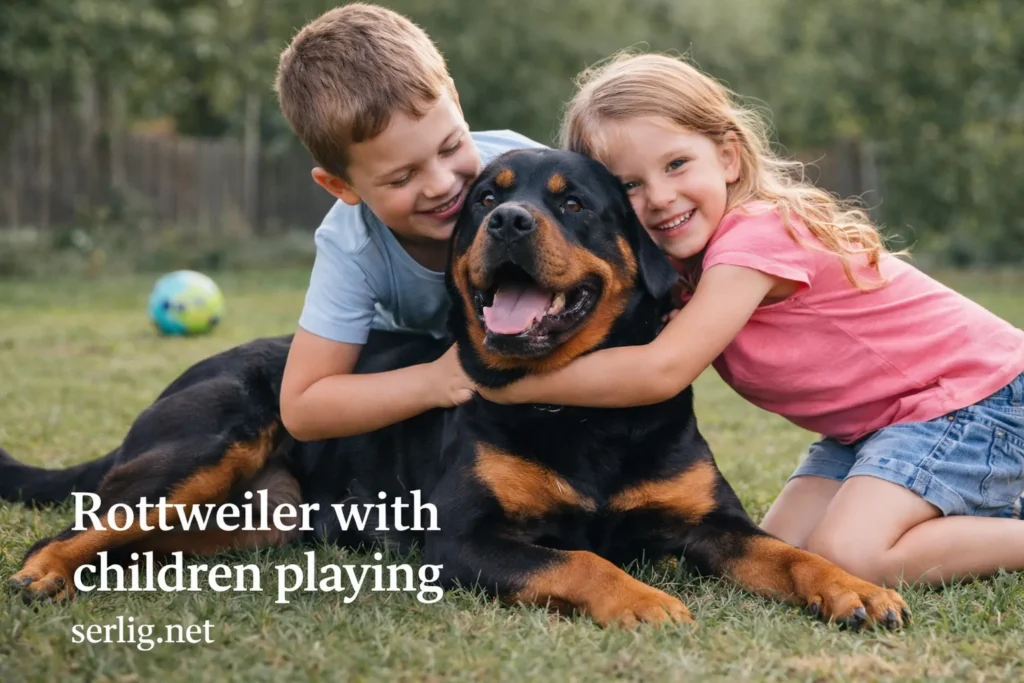
Rottweilers are often great family dogs and can be excellent with children. Their calm demeanor, combined with their protective instincts, makes them natural guardians for kids. However, due to their large size and strength, supervision around small children is essential to ensure both the child and dog are safe. Rottweilers are generally patient with children but can become defensive if they feel the child is in danger.
Their Behavior Around Other Pets and Animals
Rottweilers can coexist peacefully with other pets, especially if introduced at an early age. They tend to get along well with other dogs and animals when properly socialized. However, Rottweilers may display dominance if not socialized correctly, so it’s important to carefully monitor their interactions with smaller pets like cats or rabbits.
Importance of Early Socialization
Socialization is crucial for Rottweilers to grow into well-rounded adults. Exposing them to different people, animals, and environments as puppies helps them develop confidence and reduces the risk of behavioral issues such as aggression or fearfulness. Early socialization ensures they can distinguish between acceptable and unacceptable behavior, especially in public or around strangers.
Role in a Family Environment: Guardianship, Companionship, and Work
- Guardianship: Rottweilers are natural protectors and excel at guarding their home and family. They are vigilant and will not hesitate to protect their loved ones if they sense a threat.
- Companionship: As loyal and affectionate dogs, Rottweilers form strong bonds with their families. They are often calm and loving around their owners, enjoying their company and forming deep connections.
- Work: Rottweilers are versatile dogs and thrive when given a job. They enjoy working tasks, whether it’s in search and rescue, police work, or simply participating in family activities. Their intelligence and energy make them excellent working companions.
Training a Rottweiler
Training a Rottweiler requires consistency, patience, and an understanding of their natural instincts. These dogs respond well to positive reinforcement and need clear, firm leadership to ensure they grow into well-behaved pets.
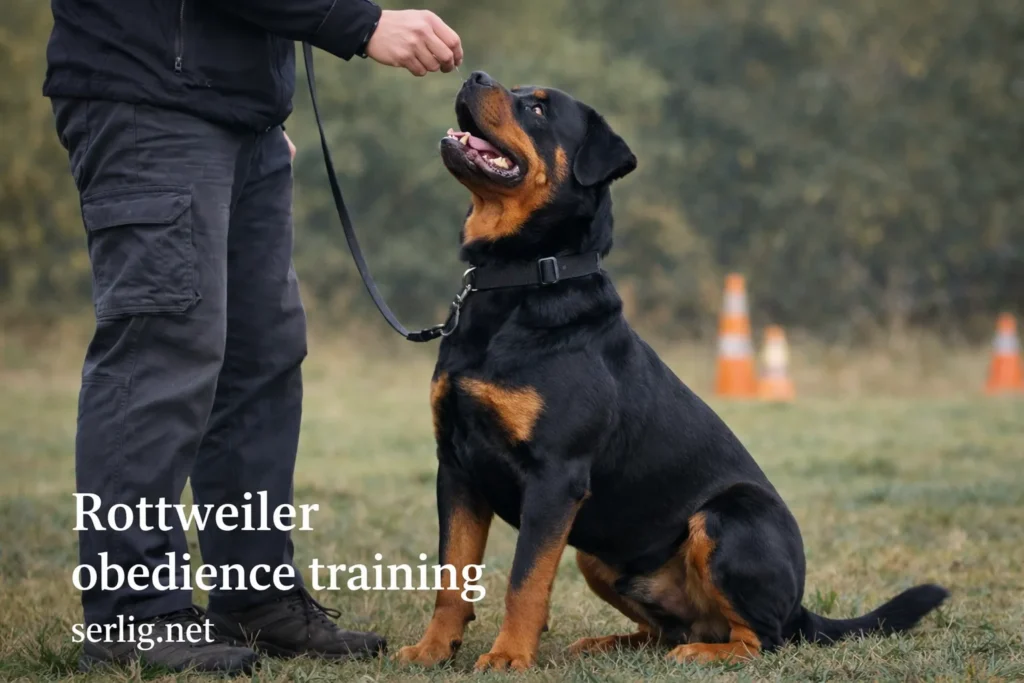
Basic Obedience Training: Sit, Stay, Come
- Sit: The “sit” command is one of the most fundamental commands to teach a Rottweiler. It’s the foundation of many other obedience exercises and helps establish control. Start by using treats to encourage your Rottweiler to sit, then reward them when they obey.
- Stay: Teaching “stay” can help control your Rottweiler in situations where they might be too eager or excited. Use short durations at first, gradually increasing the time as they learn to remain in place.
- Come: This command is crucial for safety and recall, especially in outdoor environments. Practice the “come” command in a controlled area, rewarding your Rottweiler each time they return to you.
Handling Their Dominant Nature
Rottweilers can be naturally dominant and assertive, so it’s important to establish yourself as the pack leader early on. Use consistent, firm commands and avoid harsh punishment, which can lead to behavioral issues. Positive reinforcement works best, rewarding good behavior and ignoring bad behavior.
Socialization with Other Dogs
Proper socialization is key to a well-behaved Rottweiler. Gradually introduce them to other dogs in neutral environments to prevent territorial behavior. Positive encounters will help them become more comfortable around other dogs, reducing the likelihood of aggression or dominance.
Advanced Training Techniques: Agility, Protection, and Herding
- Agility: Rottweilers excel in agility training, and it’s an excellent way to burn off excess energy while challenging their minds. They are quick learners and enjoy completing obstacle courses.
- Protection: As natural protectors, Rottweilers can be trained in protection work, especially for law enforcement or personal protection. This type of training focuses on enhancing their guarding instincts while maintaining control and obedience.
- Herding: Due to their herding background, Rottweilers can be trained to herd livestock or participate in herding activities, utilizing their drive and instinct to control and direct animals.
How to Maintain Consistent Discipline
Consistency is key in training a Rottweiler. Maintain a routine for training sessions, set clear boundaries, and always reward good behavior. Rottweilers thrive on structure, and a lack of discipline can lead to undesirable behaviors. Stay calm and patient during training, and avoid using excessive force.
Exercise and Activity Needs
Rottweilers are an active breed that requires both physical and mental stimulation to stay healthy and happy.
Daily Physical Activity Requirements
Rottweilers need at least 1-2 hours of exercise per day. Regular walks, runs, and play sessions are essential to keep them fit and prevent boredom. They enjoy vigorous activities and can be excellent partners for running or hiking.

Suitable Activities for Rottweilers
- Fetch: A great way to burn off energy and bond with your Rottweiler.
- Swimming: Low-impact exercise that’s ideal for keeping joints healthy.
- Agility Training: A fun and challenging way to engage them both mentally and physically.
Mental Stimulation: Why It’s Essential
Rottweilers are highly intelligent and require mental stimulation. Puzzle toys, scent games, and obedience training sessions can help keep their minds sharp. Without enough mental stimulation, they may become destructive or engage in undesirable behaviors.
Best Ways to Keep a Rottweiler Physically and Mentally Fit
Incorporate both physical and mental exercises into your Rottweiler’s daily routine. A combination of outdoor play, structured walks, and mental tasks will ensure they stay well-balanced and content.
Feeding and Nutrition
A proper diet is essential for the health and well-being of your Rottweiler. Their nutritional needs change as they grow, and it’s important to provide a balanced diet that supports their size, activity level, and overall health.
Ideal Diet for a Rottweiler
Rottweilers are large dogs with high energy needs, so they require a nutrient-dense diet. Look for dog food that contains:
- High-quality protein: Essential for muscle maintenance and overall health.
- Healthy fats: Important for energy and coat condition.
- Complex carbohydrates: Provide a steady source of energy.
- Vitamins and minerals: Support immune function and bone health.
Recommended Portion Sizes and Feeding Schedule
Rottweilers typically require about 3-4 cups of high-quality dry food per day, depending on their age, weight, and activity level. Puppies require more frequent meals (3-4 times a day), while adult Rottweilers generally need 2 meals per day. It’s important to adjust their food portions based on their weight and activity level to avoid obesity.
Treats and Food Allergies to Watch Out For
- Treats: While treats can be great for training, always be mindful of how many treats your Rottweiler consumes, as they can add unnecessary calories. Choose healthy, low-calorie treats, and be careful not to overfeed them.
- Food Allergies: Some Rottweilers can develop food allergies or sensitivities. Common allergens include grains (wheat, corn), chicken, and beef. If you notice symptoms such as itching, ear infections, or gastrointestinal upset, consult with your vet to adjust their diet.
Supplementing Your Rottweiler’s Diet
Depending on their age or health needs, you may need to supplement their diet with vitamins or joint supplements, particularly for older Rottweilers or those prone to hip and elbow dysplasia. Omega-3 fatty acids are beneficial for maintaining a healthy coat, and glucosamine can help support joint health.
Health Concerns and Common Issues
While Rottweilers are generally healthy dogs, they are prone to certain health conditions. Understanding these common health issues will help you provide proactive care.
Overview of Health Problems in Rottweilers
Rottweilers are generally healthy but can suffer from a few breed-specific conditions, many of which are genetic. Regular vet check-ups, proper nutrition, and exercise can help mitigate some of these concerns.
Hip and Elbow Dysplasia
Both hip and elbow dysplasia are common among Rottweilers, as they are large, heavy-boned dogs. This condition involves malformation of the joint, leading to arthritis and pain. Regular check-ups, weight management, and avoiding high-impact exercises can help manage the condition.
Heart Issues: Rottweiler’s Vulnerability to Certain Heart Diseases
Rottweilers are prone to heart conditions, particularly dilated cardiomyopathy (DCM), which affects the heart’s ability to pump blood effectively. Symptoms include lethargy, coughing, and difficulty breathing. Regular veterinary check-ups are essential to monitor heart health, especially in older dogs.
Gastric Torsion (Bloat)
Bloat, or gastric torsion, is a life-threatening condition where the stomach twists, trapping gas and food inside. It is more common in deep-chested breeds like Rottweilers. Symptoms include restlessness, bloating, and unproductive vomiting. If you suspect bloat, seek immediate veterinary attention. Preventative measures include feeding smaller, more frequent meals and avoiding exercise immediately after eating.
Common Skin Conditions and Allergies
Rottweilers may develop skin issues such as hot spots, rashes, or allergies. Regular grooming, a balanced diet, and prompt veterinary care can help manage these conditions. Allergies may cause itching, ear infections, or digestive issues. If your Rottweiler has skin concerns, consult your vet for treatment options.
Grooming and Maintenance
Rottweilers have a short, dense coat that sheds throughout the year, especially during shedding seasons. Regular grooming is essential to maintain their coat and overall health.
Coat Care: Brushing and Shedding
Rottweilers don’t require excessive grooming, but regular brushing helps manage shedding and keeps their coat shiny and healthy. Brush your Rottweiler at least once a week using a medium-bristled brush or a rubber grooming mitt to remove loose hair.
Bathing Tips for Rottweilers
Bathing should be done as needed, usually every 6-8 weeks, unless your Rottweiler becomes particularly dirty. Use a gentle dog shampoo to avoid irritating their skin, and always ensure their coat is thoroughly rinsed to avoid product buildup.
Nail Trimming, Ear Cleaning, and Dental Hygiene
- Nail Trimming: Rottweilers have strong nails that need to be trimmed regularly to prevent overgrowth and discomfort. Trim their nails every 3-4 weeks, or more frequently if necessary.
- Ear Cleaning: Rottweilers have floppy ears that can trap moisture and debris. Clean their ears regularly to avoid infections, especially if they are prone to ear issues.
- Dental Hygiene: Regular tooth brushing is crucial to prevent dental issues such as plaque and tartar buildup. Use a dog-specific toothbrush and toothpaste for this task.
Grooming Tools for Rottweilers
For optimal grooming, use the following tools:
- Medium-bristled brush or grooming mitt
- Dog shampoo and conditioner
- Nail clippers or grinders
- Ear cleaning solution and cotton balls
- Toothbrush and dog toothpaste
Managing Shedding and Maintaining Their Appearance
While Rottweilers shed moderately, regular brushing will help manage the shedding and keep their coat in good condition. You may also want to consider using a shedding brush during peak shedding periods (spring and fall).
Living with a Rottweiler
Living with a Rottweiler requires understanding their need for exercise, space, and mental stimulation. They thrive in environments where they are part of the family and have a job to do.
How Rottweilers Adapt to Apartment Living
Rottweilers can live in apartments as long as they get enough exercise and mental stimulation. They are not ideal for small apartments due to their size and energy levels. However, with proper exercise routines, such as daily walks and play sessions, they can adapt well to apartment living.
Space Requirements for a Rottweiler in a Home
Ideally, Rottweilers should have access to a yard or outdoor space where they can run and play. They do best in homes with space to move around, but they can live comfortably in smaller homes as long as their exercise needs are met.
Travel Tips and Handling Them in Public
Rottweilers are generally well-behaved in public, but early socialization is essential to prevent any aggressive tendencies. When traveling, keep them on a leash and in a secured vehicle. They enjoy trips with their family and are often calm when in new environments, but it’s essential to maintain control at all times.
Rottweilers and Their Need for Mental and Emotional Stimulation
Mental stimulation is just as important as physical activity for Rottweilers. Puzzle toys, obedience training, and interactive games will keep their minds sharp and help prevent boredom. Emotional stimulation is also key; Rottweilers are sensitive to their owner’s emotions and can form strong bonds.
Rottweiler Longevity and Lifespan
Rottweilers, like any dog breed, have specific factors that can influence their longevity. With proper care and a healthy lifestyle, Rottweilers can live happy and long lives.
1. Average Lifespan of a Rottweiler
The average lifespan of a Rottweiler is around 8 to 12 years. While this is the typical range, some Rottweilers can live beyond this range with exceptional care, while others may face health challenges that shorten their lives. The breed’s size often contributes to a slightly shorter lifespan compared to smaller dogs.
2. Factors Affecting Longevity
Several factors can influence how long a Rottweiler lives:
- Genetics: Like all breeds, genetics play a large role in a dog’s lifespan. Rottweilers that come from a line of healthy dogs with fewer hereditary health issues are more likely to live longer.
- Diet and Nutrition: Proper nutrition ensures your Rottweiler maintains a healthy weight and gets the nutrients they need for healthy bones, joints, and organs. Overfeeding or obesity can lead to health problems that shorten their lifespan.
- Exercise and Physical Activity: Rottweilers that stay active and fit are less likely to suffer from conditions like arthritis, heart disease, or obesity, all of which can affect their lifespan.
- Routine Veterinary Care: Regular vet check-ups, vaccinations, and early detection of diseases (such as hip dysplasia or heart issues) are key to improving longevity.
- Living Environment: A clean, safe, and comfortable living space will help your Rottweiler stay stress-free, which is essential for long-term health.
3. How to Maximize Your Rottweiler’s Lifespan with Proper Care
- Balanced Diet: Feed your Rottweiler high-quality food that supports their health throughout their life stages. Provide a diet rich in protein, healthy fats, and low in fillers.
- Regular Exercise: Keep them active to ensure they maintain muscle mass and healthy joints. Physical exercise reduces stress, improves heart health, and prevents obesity.
- Routine Checkups: Regular visits to the vet help catch any underlying health issues early. An annual check-up should include heart exams, joint health assessments, and overall physical evaluations.
- Preventive Measures: Keep up with vaccinations, flea and tick prevention, and maintain good hygiene (such as regular grooming) to reduce risks of infections and illnesses.
- Joint Health: Since Rottweilers are prone to hip and elbow dysplasia, maintaining joint health with supplements like glucosamine and regular low-impact exercise (e.g., swimming) can greatly benefit them.
14. Rottweilers as Working Dogs
Rottweilers are one of the most versatile and hard-working breeds. Their intelligence, loyalty, and physical prowess make them ideal candidates for various working roles.
1. Their Role in Police and Military Work
Rottweilers are commonly used in police and military roles due to their protective instincts and physical abilities. They are often trained for:
- Search and rescue: Rottweilers can detect drugs, explosives, and missing persons, utilizing their strong sense of smell.
- Patrol and protection: Their intimidating presence and natural guarding instincts make them excellent for security tasks. They can be trained to protect officers, property, or sensitive locations.
2. Search and Rescue Operations
Thanks to their heightened sense of smell and ability to work in various environments, Rottweilers are often employed in search and rescue operations. Their intelligence and drive to work make them exceptional at locating missing persons, especially in disaster zones or wilderness areas.
3. Service Dogs and Therapy Work
Rottweilers are also employed as service dogs for individuals with disabilities. They can be trained to assist with mobility, alert to medical emergencies like seizures, and provide emotional support. Their calm demeanor, intelligence, and desire to work make them suitable for therapy roles, particularly with veterans or those with physical and emotional challenges.
4. Herding and Guarding Livestock
Though not as commonly seen today, Rottweilers were originally bred to herd livestock. They still retain this herding instinct and can be used for controlling and guiding animals. Additionally, their protective instincts make them excellent guardians of livestock, especially on farms or ranches where predators might be a concern.
15. Adopting or Buying a Rottweiler
If you’re considering bringing a Rottweiler into your home, it’s essential to find the right source and make an informed decision. Whether you’re buying from a breeder or adopting from a shelter, understanding the process is vital for a successful experience.
1. How to Find a Reputable Breeder
When purchasing a Rottweiler from a breeder, always look for someone who prioritizes the health and temperament of their dogs. Here’s how to find a reputable breeder:
- Health Testing: Ensure that the breeder conducts health tests for common issues like hip dysplasia, heart problems, and elbow dysplasia. Ask for the health clearances of the puppy’s parents.
- Positive Reputation: Look for reviews or speak to previous customers. A trustworthy breeder will have a solid reputation in the community.
- Visit the Facility: Always visit the breeder’s facility. The environment should be clean, and the dogs should appear well-cared for and socialized.
- Ask for References: A good breeder should have no issue providing references from previous buyers or veterinarians.
2. Adopting a Rottweiler from a Shelter
Adopting a Rottweiler from a shelter is a wonderful option for those looking to provide a second chance to a dog in need. However, be aware that some Rottweilers in shelters may have a challenging past, so:
- Ask about the Dog’s History: Understand the Rottweiler’s background and temperament before adopting.
- Behavioral Assessment: Work with shelter staff to ensure the dog is well-suited for your home environment.
- Adoption Fees: These fees often include vaccinations, spaying or neutering, and sometimes a health check.
3. What to Look for When Choosing a Rottweiler Puppy
When choosing a Rottweiler puppy, here’s what to look for:
- Temperament: Ensure the puppy is confident, curious, and not overly shy or aggressive.
- Physical Health: Check for clear eyes, clean ears, and a healthy coat. Avoid puppies with noticeable health issues.
- Energy Level: Rottweiler puppies are active and energetic, so make sure the puppy is well socialized and appropriately engaged.
- Breeding History: Ensure the puppy comes from healthy, well-bred parents.
4. Initial Steps for Bringing a Rottweiler Into Your Home
When bringing a Rottweiler into your home, ensure you have:
- Proper space: Ensure your home has sufficient room for a large, active dog.
- Socialization plan: Start socializing your Rottweiler early to ensure they’re well-adjusted and friendly with people and pets.
- Training program: Begin basic obedience training immediately to establish boundaries and respect.
- Veterinary care: Schedule a vet check-up soon after bringing your new dog home to ensure they’re healthy and up-to-date on vaccinations.
16. Rottweiler Myths and Misconceptions
Rottweilers are often subject to misconceptions due to their intimidating appearance and protective nature. It’s important to separate fact from fiction to make an informed decision about whether this breed is right for you.
1. Common Myths About Rottweilers (Aggressive, Dangerous, etc.)
- Myth: Rottweilers are inherently aggressive.
- Fact: Rottweilers are not inherently aggressive. Like any breed, their behavior is shaped by their upbringing, socialization, and training. With proper care, they are loyal, calm, and friendly family companions.
- Myth: Rottweilers are dangerous and should be avoided.
- Fact: Rottweilers, when properly trained and socialized, are gentle, affectionate dogs. Aggression is usually a result of poor training or mistreatment.
2. How to Separate Fact from Fiction
It’s important to do thorough research and speak with responsible breeders or trainers to gain accurate insights into the breed. Ask about their history, temperament, and how they’ve been raised. The Rottweiler’s reputation for aggression often comes from misunderstandings and isolated incidents.
3. The Truth Behind Rottweilers’ Temperament and Behavior
Rottweilers are known for their intelligence, loyalty, and protective instincts. With proper training, they can be well-mannered and loving dogs that form strong bonds with their families. They are not naturally aggressive, but they have a deep sense of responsibility toward their loved ones, which can sometimes be mistaken for hostility.
Conclusion: Why a Rottweiler Could Be the Right Dog for You
Recap of Key Points for Prospective Owners
Rottweilers are loyal, intelligent, and protective dogs that make excellent companions when properly trained and socialized. They excel in a variety of roles, from family guardians to working dogs in police, military, and rescue operations. With proper care, they can live long, healthy lives and form deep bonds with their families.
Ideal Family and Living Situations for a Rottweiler
Rottweilers are best suited for families with an active lifestyle. They need space, mental stimulation, and physical exercise. They thrive in homes where they are an integral part of the family and are involved in daily activities.
Final Thoughts on Being a Responsible Rottweiler Owner
Owning a Rottweiler comes with responsibility. Ensure you provide them with a structured environment, consistent training, and plenty of exercise. By doing so, you’ll be rewarded with a loving, protective companion who is always there for you and your family.
Rottweiler FAQ (Frequently Asked Questions)
1. Are Rottweilers good family dogs?
Yes, Rottweilers can make excellent family dogs. They are loyal, protective, and affectionate with their family members. They are particularly good with children, but due to their size and strength, supervision is recommended when around small children. Proper socialization and training are essential for a well-behaved Rottweiler in a family environment.
2. Do Rottweilers get along with other pets?
Rottweilers can get along with other pets, especially if they are raised together or properly socialized. However, they can be territorial and dominant, so early socialization with other dogs and pets is key to ensuring they develop good relationships with them. It’s important to introduce them to other animals in a controlled manner to prevent any aggression or dominance behavior.
3. How much exercise does a Rottweiler need?
Rottweilers are an active breed and need at least 1-2 hours of physical exercise daily. This can include walks, runs, playtime, and interactive activities. They also benefit from mental stimulation, such as puzzle toys or training sessions, to keep their minds sharp. Regular exercise helps prevent obesity, joint problems, and behavioral issues.
4. How long do Rottweilers live?
Rottweilers typically live between 8 to 12 years. With proper care, including a balanced diet, regular exercise, and routine veterinary check-ups, some Rottweilers can live beyond 12 years. Like all dogs, their lifespan can vary depending on genetics, lifestyle, and health conditions.
5. Are Rottweilers aggressive dogs?
Rottweilers are not inherently aggressive. They are protective and loyal by nature, but aggression is usually a result of poor socialization, lack of training, or mistreatment. When raised in a positive environment with proper training and socialization, Rottweilers are generally calm, affectionate, and friendly.
6. Are Rottweilers easy to train?
Rottweilers are intelligent and eager to please, making them relatively easy to train. However, they can also be independent and strong-willed, so they require a firm, consistent owner who can establish themselves as the leader. Positive reinforcement methods work best for Rottweilers, and early socialization is crucial to ensure they grow up well-behaved.
7. Do Rottweilers need a lot of grooming?
Rottweilers have short, dense coats that require minimal grooming. Brushing once a week is usually enough to manage shedding and keep their coat healthy. They are moderate shedders, with peak shedding during seasonal changes. Regular grooming tasks include trimming their nails, cleaning their ears, and brushing their teeth.
8. What health problems are common in Rottweilers?
Rottweilers can be prone to several health issues, including:
- Hip and elbow dysplasia: Joint malformations that lead to arthritis and pain.
- Heart conditions: Rottweilers are at risk for dilated cardiomyopathy, a heart disease.
- Gastric torsion (bloat): A life-threatening condition where the stomach twists, trapping gas and food.
- Skin conditions and allergies: Rottweilers may suffer from skin infections, hot spots, or food allergies.
Regular vet check-ups and a healthy lifestyle can help mitigate some of these issues.
9. Are Rottweilers good guard dogs?
Yes, Rottweilers are excellent guard dogs due to their protective instincts, intelligence, and alertness. They are naturally wary of strangers and will protect their family and territory when they sense a threat. Their intimidating appearance also acts as a deterrent for potential intruders. Proper training is important to ensure they don’t become overly aggressive.
10. Can Rottweilers live in apartments?
While Rottweilers are large and active dogs, they can live in apartments if they receive enough exercise and mental stimulation. They require daily walks, playtime, and time outdoors. Rottweilers do best in larger spaces, so if you live in an apartment, be prepared to provide them with ample physical and mental exercise.
11. How much should I feed my Rottweiler?
The amount you should feed your Rottweiler depends on their age, weight, and activity level. Adult Rottweilers generally require 3-4 cups of high-quality food per day, divided into two meals. Puppies and younger Rottweilers may require more frequent meals, while older or less active dogs may need fewer calories. Always follow the feeding guidelines on the dog food packaging and consult your vet for specific recommendations.
12. What should I look for in a Rottweiler breeder?
When looking for a reputable Rottweiler breeder, ensure they prioritize the health and temperament of their dogs. A responsible breeder will:
- Provide health clearances for the puppy’s parents (such as hip, elbow, and heart clearances).
- Allow you to meet the puppy’s parents and visit their facility.
- Socialize their puppies from an early age.
- Be knowledgeable and transparent about the breed and potential health concerns.
13. Can Rottweilers be good with children?
Yes, Rottweilers are often good with children, especially when they are raised in a family environment. They are protective and affectionate toward their family members, including children. However, because of their size and strength, supervision is important, especially with younger children, to ensure both the dog and the child stay safe during interactions.
14. Do Rottweilers get along with other dogs?
Rottweilers can get along with other dogs, but they may be territorial or dominant, especially if not properly socialized. Early socialization with other dogs is essential to ensure they learn appropriate behavior and interactions. With proper training, Rottweilers can live harmoniously with other dogs, especially if they have grown up together or were properly introduced.
15. What’s the difference between an American and a German Rottweiler?
The primary difference between American and German Rottweilers lies in their breeding focus:
- American Rottweilers are typically bred for conformation to breed standards and are often lighter and less intense in temperament.
- German Rottweilers are bred with a focus on working abilities and are often more muscular, energetic, and driven, making them more suited for working roles such as police, military, or protection.
Both types can make wonderful family pets, but the German Rottweiler may require more physical activity and mental stimulation.