What is Bankruptcy?
Imagine you owe a lot of money, and no matter how hard you try, you can’t pay it back. Maybe you lost your job, had unexpected medical bills, or something else happened that made it hard to keep up with your payments. Bankruptcy is like a fresh start for people who are struggling with too much debt.
In simple words, bankruptcy is a legal way for people or businesses to tell the government that they can’t pay their debts. It helps them get some relief by either wiping away some of the money they owe or giving them more time to pay it back.
When someone files for bankruptcy, it’s like hitting the “reset” button on their finances. But, it also comes with consequences, like affecting their credit score and how much money they can borrow in the future.
Why Do People File for Bankruptcy?
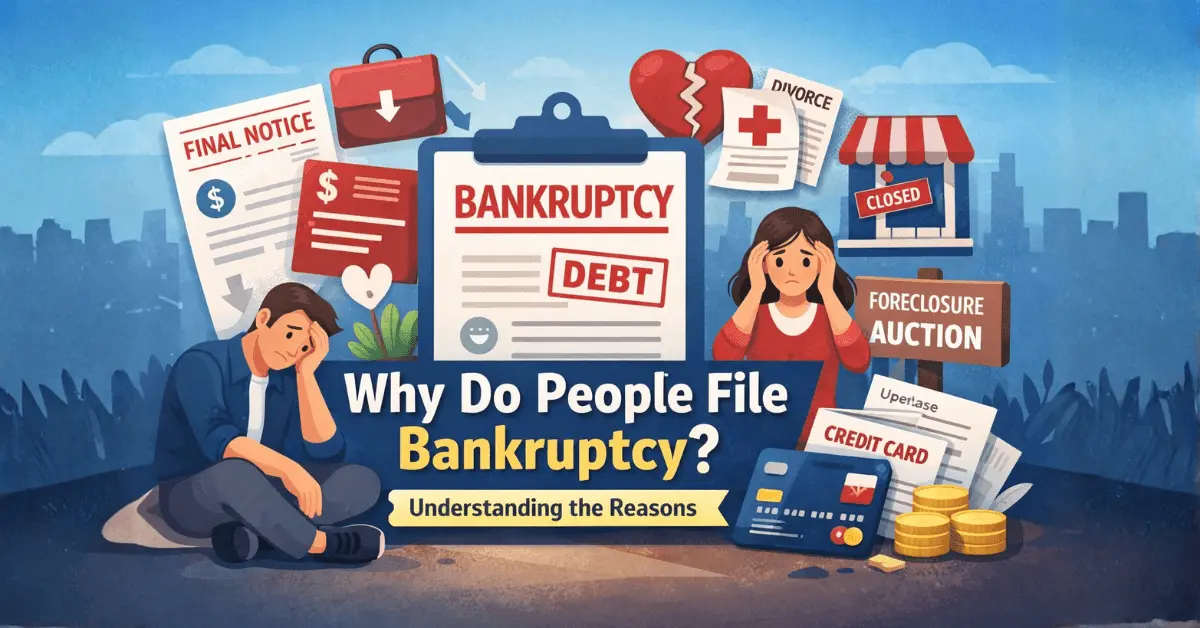
People file for bankruptcy for many reasons. Some of the most common reasons include having too much credit card debt, dealing with medical bills, losing a job, or going through a divorce. Bankruptcy can help them get back on track and stop feeling trapped by their debts.
We’ll explore why people file for bankruptcy, the different types of bankruptcy, and what happens when someone decides to go down this path.
Why Do People File for Bankruptcy?
Filing for bankruptcy is a big decision, and people usually do it when they feel overwhelmed by debt and see no other way out. Here are some of the most common reasons why people decide to file for bankruptcy:
1. Medical Debt
Imagine you or a loved one gets really sick, and you need expensive treatments or hospital visits. Sometimes, even with insurance, the bills can be so high that it’s hard to pay them off. Medical debt is one of the biggest reasons why people file for bankruptcy. They might have thousands, or even millions, of dollars in bills that they can’t afford to pay.
- Example: Sarah went to the hospital for surgery and, even though she had insurance, her medical bills were still more than $50,000. She couldn’t pay them off, so she filed for bankruptcy to get rid of the debt.
2. Job Loss or Reduced Income
Losing a job or having your work hours cut back can cause a lot of stress. Without enough money coming in, it can be impossible to keep up with bills and other debts. If someone can’t find a new job quickly enough or doesn’t make enough money, they may choose to file for bankruptcy to get relief.
- Example: Tom lost his job due to the company closing down. He couldn’t find another job right away, and his bills piled up. After a while, he realized he couldn’t pay back all the money he owed, so he filed for bankruptcy to get a fresh start.
3. Credit Card Debt
Sometimes people use credit cards to buy things they can’t afford right away, thinking they’ll pay it back later. But if they keep spending and the bills keep adding up, it can feel impossible to catch up. The interest on credit card debt can be very high, making it even harder to pay it off. This is another reason people might file for bankruptcy.
- Example: Lisa had several credit cards and used them to buy things she needed and wanted. Over time, the bills got bigger because of the interest, and soon she couldn’t keep up with payments. She decided to file for bankruptcy to get rid of the credit card debt.
4. Divorce
When people get divorced, it can be very expensive. There are legal fees, child support, alimony, and often the splitting of assets. All of this can create a lot of financial pressure. If someone ends up with more debt than they can handle after a divorce, they might file for bankruptcy to get some help.
- Example: After John and Mary divorced, John was left with debt that he couldn’t afford to pay. He filed for bankruptcy to help him start over and manage his finances better.
5. Business Failure
Sometimes, people start businesses with hopes of making a lot of money. But not all businesses succeed. If a business owner borrows money to fund their business and it doesn’t work out, they may end up with a lot of debt. If they can’t pay it back, bankruptcy might be the best option to get out of financial trouble.
- Example: David opened a restaurant, but after a few years, it wasn’t making enough money to pay back the loans he had taken to start it. He filed for bankruptcy to close the business and get rid of the debts.
6. Tax Debt
When people owe a lot of money to the government, like for unpaid taxes, it can be difficult to repay that amount. If someone falls behind on taxes, they might end up facing tax debt, which can grow over time due to penalties and interest. If the debt becomes too much to handle, filing for bankruptcy might be the only way out.
- Example: Mary didn’t file her taxes properly for several years. She owed a lot of money to the government, and after the penalties kept adding up, she decided to file for bankruptcy to get rid of the tax debt.
Different Types of Bankruptcy
When someone decides to file for bankruptcy, there are different options depending on their situation. The two most common types of bankruptcy are Chapter 7 and Chapter 13, and they work in different ways. Let’s break them down in simple terms so you can understand how each one works.
1. Chapter 7 Bankruptcy (Liquidation)
Chapter 7 is often called liquidation bankruptcy because it involves selling some of your assets (things you own) to pay off your debts. If you qualify for Chapter 7, you may not have to pay back all of your debt. Instead, the court sells your property (such as your car, house, or other valuable items) to help pay your creditors (the people or businesses you owe money to). After this, most of your remaining debts are forgiven or wiped out.
- How It Works:
- A bankruptcy trustee is assigned to your case. This person is responsible for selling your assets and using the money to pay off your debts.
- If your property isn’t worth much, or if you don’t have many assets, you may not lose much, and your debts can be cleared.
- Certain types of debts, like student loans and tax debt, may not be forgiven.
- Who Should Use It:
- People who have little or no property and are unable to repay their debts.
- People who don’t make enough money to pay off their debts and need a fresh start.
- Example:
- Mark has $20,000 in credit card debt and a car worth $5,000. He files for Chapter 7, and the bankruptcy trustee sells the car to pay some of his debt. The rest of the credit card debt is forgiven, so Mark starts over with no debt.
2. Chapter 13 Bankruptcy (Reorganization)
Chapter 13 is called reorganization bankruptcy because it doesn’t involve selling assets. Instead, it allows you to create a payment plan to pay off your debts over a period of time, usually 3 to 5 years. In Chapter 13, you keep your property, but you agree to pay your creditors a portion of what you owe based on your income.
- How It Works:
- You work with a bankruptcy trustee to create a plan where you make monthly payments to your creditors over 3 to 5 years.
- Your payments are based on how much you earn, how much debt you have, and how much you can afford to pay each month.
- Once you’ve completed the plan, any remaining debt that wasn’t paid off during the repayment period may be forgiven.
- Who Should Use It:
- People who have regular income and want to keep their property but need help making their monthly payments more manageable.
- People who are behind on mortgage or car payments and want to catch up without losing their house or car.
- Example:
- Susan owes $30,000 in credit card debt and is behind on her mortgage. She files for Chapter 13 and agrees to make monthly payments over 5 years. After 5 years of payments, most of her credit card debt is wiped out, and she keeps her house.
3. Business Bankruptcy
Sometimes, businesses also need to file for bankruptcy. Just like individuals, businesses can use Chapter 7 or Chapter 13, but they often use a special type of bankruptcy called Chapter 11.
- Chapter 11 Bankruptcy:
- Chapter 11 is mostly used by businesses that want to keep operating while they pay off their debts. It allows the business to reorganize its finances and try to get back on track.
- The business works with creditors to come up with a plan to repay its debts over time, while continuing to operate.
- Who Should Use It:
- Large businesses or corporations that need time to reorganize and fix their finances.
- Small businesses that want to stay open while negotiating their debt.
- Example:
- A restaurant chain that owes millions of dollars in debt might file for Chapter 11 bankruptcy. They work out a plan with creditors to repay a portion of the debt over several years while keeping the business open.
The Impact of Filing for Bankruptcy
Filing for bankruptcy is a big decision, and it can have long-lasting effects on your life. It’s important to understand how it will impact your credit score, your assets, and your future finances. Let’s break down the main effects so you know what to expect.
1. Impact on Your Credit Score
One of the biggest consequences of filing for bankruptcy is how it affects your credit score. Your credit score is a number that shows how trustworthy you are when it comes to borrowing money. The lower your score, the harder it is to get loans, credit cards, or even rent an apartment.
- How It Affects Your Credit:
- Chapter 7 Bankruptcy: This can stay on your credit report for 10 years. During that time, your score will likely drop, making it harder to get approved for new credit.
- Chapter 13 Bankruptcy: This can stay on your credit report for 7 years. While the impact on your score may not be as severe as Chapter 7, it still lowers your credit score.
- What You Can Do:
- After filing for bankruptcy, you can start working to rebuild your credit. This might take some time, but by paying your bills on time, using credit responsibly, and keeping your debt low, you can improve your score over time.
- Example:
- John filed for Chapter 7 bankruptcy after losing his job and falling behind on bills. His credit score dropped from 650 to 450, but over the next few years, he worked hard to pay off new debts and eventually raised his score to 700.
2. Impact on Your Assets
When you file for bankruptcy, your assets (things you own) may be affected, depending on the type of bankruptcy you file.
- Chapter 7 Bankruptcy:
- In Chapter 7, your assets may be liquidated (sold) to pay back your creditors. However, many items, like your car or home, may be protected if you don’t have much equity (value) in them. Some states allow you to keep essential items like your car or your home, especially if you’re behind on payments.
- Exempt Property: You may be able to keep certain items like clothing, tools you need for work, and household goods.
- Chapter 13 Bankruptcy:
- In Chapter 13, you keep your property, but you must agree to a payment plan. You won’t have to sell your home or car, but you’ll need to keep up with the monthly payments as part of the repayment plan.
- Example:
- Sarah filed for Chapter 13 bankruptcy and was behind on her mortgage payments. As part of her bankruptcy plan, she worked out a schedule to catch up on the mortgage while keeping her home.
3. Long-Term Financial Impact
Filing for bankruptcy can impact your finances for years, but it’s important to see it as a fresh start. Once you go through the bankruptcy process, you might feel a lot of stress relieved because you no longer have to worry about overwhelming debt.
- After Bankruptcy:
- Your remaining debts are usually wiped out, giving you a chance to start fresh.
- However, it’s important to be careful with future borrowing. You’ll need to be cautious about taking on more debt and avoid falling into the same financial troubles.
- Example:
- After completing her Chapter 13 repayment plan, Michelle’s debts were mostly paid off, and she was able to start saving money for emergencies. Although her credit wasn’t perfect, she was able to qualify for a small loan to buy a car after a few years.
4. Impact on Future Borrowing
After filing for bankruptcy, it will be harder to get approved for loans or credit cards. But it’s not impossible! You can still get credit, but you may have to start with things like a secured credit card or a small personal loan.
- Secured Credit Card: This is a credit card where you have to put down a deposit as collateral. It’s a good way to start rebuilding your credit after bankruptcy.
- Example:
- Tom filed for bankruptcy and couldn’t get approved for a regular credit card. But he was able to get a secured credit card with a $500 limit. Over the next year, he used it responsibly, and his credit score started to improve.
Alternatives to Filing Bankruptcy
While bankruptcy can provide a fresh start for those overwhelmed by debt, it’s not the only option. There are several alternatives to bankruptcy that might help you manage your debt and avoid the negative impacts on your credit and future finances. Let’s explore these options:
1. Debt Consolidation
Debt consolidation is when you combine all your debts into one single loan or payment. Instead of paying several different creditors every month, you pay just one. The goal is to make your debt easier to manage, and often the interest rate is lower than the rates on your credit cards or other loans.
- How It Works:
- You take out a new loan (often a personal loan or a balance transfer credit card) to pay off your existing debts.
- Then, you make one monthly payment to the new loan instead of multiple payments to different creditors.
- Benefits:
- Simplifies your finances by combining everything into one monthly payment.
- May lower your monthly payments and interest rates, making it easier to pay off your debt.
- Can improve your credit score over time if you make timely payments.
- Example:
- Lisa had $10,000 in credit card debt spread across four cards. She took out a debt consolidation loan with a 5% interest rate and used it to pay off the credit cards. Now, she only makes one payment each month, saving money on interest and avoiding late fees.
2. Debt Settlement
Debt settlement involves negotiating with your creditors to settle your debts for less than what you owe. This can be a good option for people who are unable to pay their debts in full and want to avoid bankruptcy.
- How It Works:
- You or a debt settlement company negotiate with your creditors to reduce the total amount you owe.
- The creditor may agree to accept a smaller payment, and you pay the agreed-upon amount as a lump sum or through a payment plan.
- Risks:
- Settling your debts may negatively impact your credit score.
- Creditors may not always agree to a settlement, and it could take time.
- You may have to pay taxes on any debt that is forgiven.
- Example:
- Mark owed $15,000 in credit card debt but could only afford to pay $10,000. He contacted a debt settlement company, and after several months, his creditors agreed to settle for $10,000. He paid the settlement amount in a lump sum and avoided bankruptcy.
3. Credit Counseling
Credit counseling is when you work with a professional who helps you manage your debt. A credit counselor can provide advice on budgeting, debt management, and even help you set up a Debt Management Plan (DMP), which allows you to pay off your debt through a structured plan.
- How It Works:
- A credit counselor will review your finances, including income, expenses, and debts, to help create a plan for paying off your debt.
- If you use a DMP, the counselor will negotiate with your creditors to lower your interest rates and help you manage your payments.
- Benefits:
- Can help you avoid bankruptcy by creating a manageable plan to pay off your debt.
- Provides financial education to help you avoid future debt problems.
- May help lower your interest rates and monthly payments.
- Example:
- Sarah was struggling with credit card debt and didn’t know how to manage it. She reached out to a credit counseling agency and worked with a counselor to create a DMP. The counselor helped her get her interest rates lowered, and now she makes one affordable monthly payment.
4. Refinancing Your Home
If you own a home and are struggling with unsecured debt (like credit cards or medical bills), refinancing your home might be an option. By refinancing, you take out a new loan to pay off your existing mortgage, and you may be able to borrow extra money to pay off other debts.
- How It Works:
- You refinance your mortgage for a higher amount than what you owe on your house.
- The extra money you borrow is used to pay off other debts.
- Risks:
- You’re using your home as collateral, meaning if you fail to make payments, you could risk foreclosure.
- It can be difficult to qualify for a refinancing loan, especially if you have bad credit.
- Example:
- John refinanced his home to get a lower interest rate and also borrowed some extra money to pay off his credit card debt. While his mortgage payment went up slightly, he was able to eliminate his credit card debt and improve his financial situation.
5. Negotiating with Creditors
Before considering bankruptcy, you can also try negotiating directly with your creditors to get lower payments or reduced interest rates. Many creditors are willing to work with you, especially if they see that you’re trying to make an effort to pay off your debt.
- How It Works:
- You contact your creditors and explain your financial situation.
- Ask for a lower interest rate, a payment plan, or a temporary reduction in payments.
- Some creditors may even agree to settle your debt for a lower amount than what you owe.
- Benefits:
- You may be able to get a better deal without filing for bankruptcy.
- Can help you stay on top of payments and avoid the negative effects of bankruptcy.
- Example:
- Maria called her credit card company and explained her situation. After negotiating, the company agreed to lower her interest rate from 22% to 12%, making it easier for her to pay off her debt.
Emotional and Psychological Impact of Filing for Bankruptcy
Filing for bankruptcy can be a difficult decision, not just because of the financial impact, but also because of the emotional and psychological effects it can have. When people face overwhelming debt, they often feel anxious, ashamed, and stressed. It’s important to recognize these feelings and understand how to cope with them.
1. Stress and Anxiety
One of the most common feelings people experience when dealing with debt is stress. The constant pressure of bills piling up, phone calls from creditors, and the worry of not being able to pay for basic needs can lead to anxiety. Filing for bankruptcy can bring some relief from this stress because it helps to stop creditor harassment and offers a structured way out of financial trouble.
- How It Helps:
- Bankruptcy provides a clear plan to address debt, which can reduce the anxiety of not knowing how to handle the situation.
- Filing for bankruptcy can stop creditors from calling, stopping wage garnishments, and putting an end to other financial pressures.
- Example:
- Jessica had been struggling with credit card debt for years, feeling overwhelmed every day. Once she filed for bankruptcy, she finally felt a sense of relief, knowing that she no longer had to worry about her creditors coming after her.
2. Shame and Guilt
Many people who file for bankruptcy feel a sense of shame or guilt. They may feel like they’ve failed or that they’ve let down their family or loved ones. This feeling is often tied to the stigma that bankruptcy has in society — many people associate it with poor financial management or irresponsibility.
- How to Cope:
- It’s important to remember that bankruptcy is a legal tool meant to help people who are overwhelmed by debt. It’s not about failure, but about getting a fresh start.
- Talking to a financial counselor or a support group can help people cope with these emotions and understand that they are not alone in their struggles.
- Example:
- Michael felt ashamed after filing for bankruptcy, thinking it would hurt his reputation. However, after talking to others who had gone through the same process, he realized that many people had used bankruptcy as a way to rebuild their financial lives.
3. Feelings of Failure or Regret
After filing for bankruptcy, some people experience feelings of failure or regret. They may wish they had made different choices or worked harder to avoid the situation. It’s normal to have these feelings, but it’s important to recognize that bankruptcy can be a way to move forward and recover.
- How It Helps:
- Bankruptcy can give individuals a second chance. It’s not the end of the road but rather a starting point for a healthier financial future.
- With time, people can rebuild their credit and learn from the mistakes that led to bankruptcy. It’s important to focus on the future and the steps you can take to improve your financial situation.
- Example:
- Emily felt like a failure after her bankruptcy but realized that she had learned important lessons about budgeting and managing debt. By focusing on her financial recovery, she was able to start rebuilding her life and her credit.
4. Family Strain
For many people, financial problems can put a strain on relationships, especially within families. The stress of debt can lead to arguments, anxiety, and sometimes even separation. Bankruptcy might feel like it’s just adding more stress to an already difficult situation.
- How to Cope:
- Open and honest communication with family members is key. It’s important to share your feelings and explain why filing for bankruptcy might be the best solution for everyone involved.
- Sometimes, couples or families choose to get financial counseling together, which can help them learn how to manage money and support each other through the process.
- Example:
- Karen and her husband were both stressed about their finances. After filing for bankruptcy, they made an effort to sit down together, talk about their finances, and create a new budget. This helped strengthen their relationship and ease some of the tension.
5. Rebuilding Confidence and Control
While bankruptcy can feel overwhelming, it also provides an opportunity to regain control over your finances. It’s normal to feel down after the process, but many people find that once they start rebuilding their finances, they also begin to rebuild their confidence.
- How It Helps:
- After bankruptcy, people often feel a renewed sense of purpose as they take steps to improve their financial situation. This might include setting up a budget, paying bills on time, and working on credit recovery.
- With time and effort, bankruptcy can help people feel empowered and in control of their financial future.
- Example:
- After his bankruptcy was discharged, Greg started working with a credit counselor to rebuild his credit score. Slowly but surely, he felt more confident in his ability to manage his money and start fresh.
Conclusion: Is Bankruptcy the Right Choice?
Filing for bankruptcy is a serious decision, and it’s not one that should be taken lightly. However, it can provide relief for people who are overwhelmed by debt and unable to see another way out. It’s important to understand that bankruptcy is not a failure — it’s a legal tool meant to help people regain control of their finances and start fresh.
When Should You Consider Bankruptcy?
You might consider bankruptcy if:
- You’re overwhelmed by debt that you can’t afford to pay back, even after cutting back on expenses and trying to make changes.
- Your creditors are constantly calling and you feel like you have no way to catch up.
- You’ve tried other options like debt consolidation, credit counseling, or negotiating with creditors, and those solutions haven’t worked.
- You’ve had an unexpected life event, like a serious illness, job loss, or divorce, that has put you in a financial situation you can’t manage.
When Should You Avoid Bankruptcy?
Bankruptcy isn’t the right choice for everyone. It may not be the best solution if:
- You can still afford to make payments: If you’re able to make at least some payments toward your debts and keep up with bills, bankruptcy might not be necessary.
- You have non-dischargeable debts: Some debts, like student loans, certain taxes, and child support, can’t be wiped out in bankruptcy.
- You haven’t fully explored alternatives: Before filing for bankruptcy, try exploring other options like debt consolidation, debt settlement, or working with a credit counselor.
What to Do After Filing for Bankruptcy
If you decide to file for bankruptcy, it’s important to focus on financial recovery after the process is complete. Here are some key steps to take:
- Rebuild Your Credit: Start small by using a secured credit card, paying bills on time, and keeping your credit utilization low.
- Create a Budget: Having a clear plan for managing your money will help you avoid falling back into debt.
- Stay Positive and Learn from the Experience: Use this opportunity as a fresh start. Bankruptcy may have been difficult, but now you have a chance to learn from the past and build a stronger financial future.
Filing for bankruptcy can offer a much-needed fresh start for those struggling with unmanageable debt. It can stop creditor harassment, eliminate most of your debts, and help you regain control over your finances. However, it’s important to understand the long-term effects, including the impact on your credit score and future borrowing ability. If you’re unsure whether bankruptcy is right for you, consider consulting a financial advisor or a bankruptcy attorney who can help guide you through the decision-making process.