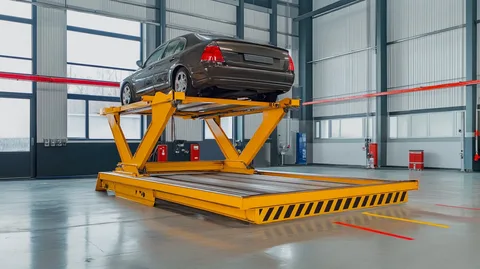
Vertical vehicle systems have developed to alter the mode of transportation and parking of buildings. Multi-storey garages, factories and residential blocks are increasingly using modernised car lifts to manage the increasing demands effectively. The transition to complex systems, instead of the old-fashioned lifts, guarantees the increase in the safety levels, reliability, and technological accuracy.
Car Lift Modernisation is major in this change. Modern lifts offer a stable performance but can fit bigger and heavier cars by incorporating smart controls, innovative safety functionality, and IoT functionality in the monitoring of the lifts. Modernization of elevator service companies have started integrating these technical advancements in the old infrastructures which have made them to run smoothly, predictively to maintain, and to meet the contemporary safety standards. This strategy will show how mechanical enhancesments and smart automation have increasingly become intertwined in the vehicle handling systems.
ALSO READ :: How AI Automation Is Making Work Easier for Everyone
Understanding Car Lift Modernisation
Modernising of car lifts entails updating the current systems in accordance with the current safety, efficiency and technological demands. In contrast to traditional lifts, modernised lifts are digitalised, automated and improved with sophisticated structural features, which allow them to be used both in homes and in commercial locations.
Core Technology in Modern Car Lifts
In the present-day car lifts, the systems are based on the digital control to manage the movement of the lift accurately. The high level of safety equipment, such as emergency brakes, load sensors, and others, provide protection to passengers and vehicles. IoT monitoring and automation has become a part of many systems, offering real-time diagnostic and remote operation functionality. These innovations characterize the modern lift safety standard and performance.
Mechanical and Structural Improvements
Improvement of hydraulic and traction system increases reliability and load capacity. Structural stability of platforms and guides is guaranteed through reinforcing, and safety and durability of cabins and loading zones is optimised. The modernisation of hydraulic lift enables old lifts to be brought up to modern operating standards without the need to costly replace them, thus hydraulic lift modernisation is feasible and sustainable.
Advantages of Modernising Car Lifts
The technical and practical advantages of upgrading the car lifts applied to building management and efficiency in handling the vehicles.
Safety and Compliance
Modernisation makes it conform to new safety guidelines. The mechanical hazards of older lifts are mostly risky and the new systems minimise the failure rates, safeguard passengers and vehicles. Standalone safety measures, such as built-in emergency response functions, contribute to the increase of trust towards lift operations.
Operational Efficiency
Jet engines have helped to ensure that lifts are running with minimal downtimes because of the enhanced reliability and predictive maintenance. Handling the loads is improved and energy-efficient items lower the operation costs. Remote monitoring when integrated with building management enables building managers to monitor performance and proactively foresee future maintenance needs.
Integration with Smart Systems
Good integration enables car lifts to be used with automated parking systems. Car scheduling, optimisation of traffic and remote diagnostics are used to provide a smooth running. The given integration is compatible with the larger automation of the building, making lift modernisation services a key of the intelligent infrastructure.
Applications of Car Lift Modernisation
The modernised car lifts are multi-purpose and provide solutions both in a residential, commercial and industrial premise.
Residential Buildings
The advantages of multi-level condominiums and private garages are in the fact that they have automated lifts that accommodate several vehicles. Modernisation gives consistency to the operation even in the older buildings and the optimised platforms allow users to use various sizes of vehicle.
Commercial Properties
Car lift modernisation has been applied in shopping malls, office complexes, and industrial facilities to simplify the traffic flow and management of vehicles. Huge capacity lifts and automated scheduling enhance productivity in a high demand setting.
Public and Industrial Spaces
City garages, car repair shops and warehouse facilities depend on the use of modern lifts to carry out matters efficiently. The safety and automation upgrades minimize the accidents and enhance the throughput, as well as long-term operational stability. Such systems are operated with expert lift modernisation services and professional installations to make sure that they work all across the applications.
Technical Considerations in Modernisation Projects
The planning of car lift modernisation should be done with a lot of care in providing the installations and monitoring to maintain safety and reliability.
Assessment and Planning
All the lift systems are structurally evaluated, assessed in terms of loads and risk assessments. Before the implementation, professional engineers review the design of the building, lift travels requirements, and safety requirements.
Installation and Testing
Technicians that are certified adhere to strict installation procedures, certifying performance level at every step. Functionality is tested, emergency safety functionality and regional conformity.
Long-Term Monitoring and Maintenance
Timely maintenance, remote control, and proactive maintenance increase the life period of the lift. Digital platform integration will enable real-time monitoring of the performance, which will decrease the time of unforeseen downtime and maintenance expenses.
Trends in Automated Vehicle Systems
Modernisation of port cranes is moving in line with the current technologies and contemporary trends in the industry.
Smart Parking Systems
The IoT can be connected to automatically track and direct cars in parking buildings. Smart systems cut down the congestion and enhance efficiency in both the governmental and commercial amenities.
Energy Efficiency
During the lift descent, regenerative drives utilize the energy and LED lighting lowers the amount of electricity. Modern lifts are environmentally friendly because their designs are energy efficient.
Future Prospects
The use of AI to predict scheduling and autopilot cars is increasing. These innovations will ensure that operations are automated, fewer people are involved, and building automation is carried to new levels.
Choosing the Right Car Lift Modernisation Partner
When a professional service provider is selected, the upgrade will be successful and reliable in terms of operation in the long term.
Assessing Expertise and Credentials
Find firms that are already experienced and those engineers who are certified to undertake complex modernisation work.
Reviewing Past Projects
Precise residential, commercial and industrial lift upgrades completed to determine technical expertise and reliability.
Ensuring Compliance and Warranty
Select distributors with comprehensible guarantees of parts and installation. The security certification and compliance to the local regulations depict reliable service.
Conclusion
The car lift modernisation is transforming the vehicle handling in residential, commercial, and industrial markets. New systems have ensured safety, operating efficiency, and linkage to intelligent building technologies. Modernised lifts have higher loads, are compatible with smart platforms, and are good long-term performers. Car Lift Modernisation is one of the main steps to the automated and technology-oriented vehicle systems. These systems have created new standards of safety, efficiency and modern infrastructure design by integrating mechanical improvements with digital controls and predictive maintenance. With technological development, intelligent building management and automated vehicle functions will still be essential with the use of modernised lifts.
FAQs
What is the frequency of car lifts inspection?
It is suggested that residential lifts should be inspected at least once a six-month period and commercial or industrial lifts inspected every three months. Frequent maintenance makes the system safer, minimizes the risks of mechanical malfunction, and increases the usefulness of the system.
What are the safety precautions needed in new lifts?
Important safety measures are load sensors, emergency brakes, overload safety and emergency light. These systems safeguard the cars and the occupants and are economical in terms of operation.
Is it possible to modernize the old lifts?
Yes, there can be structural and mechanical improvements on the existing lifts. The old lifts can be updated to meet the present safety and performance standards using modern control systems, reinforced platforms, and Internet of Things-based monitoring.
What are the advantages of using smart systems with lifts?
Remote monitoring, predictive maintenance, automated scheduling, and energy-efficient operation are only possible through integration with smart systems. It increases the reliability, minimizes the downtimes and increases the overall control of the lift operations.