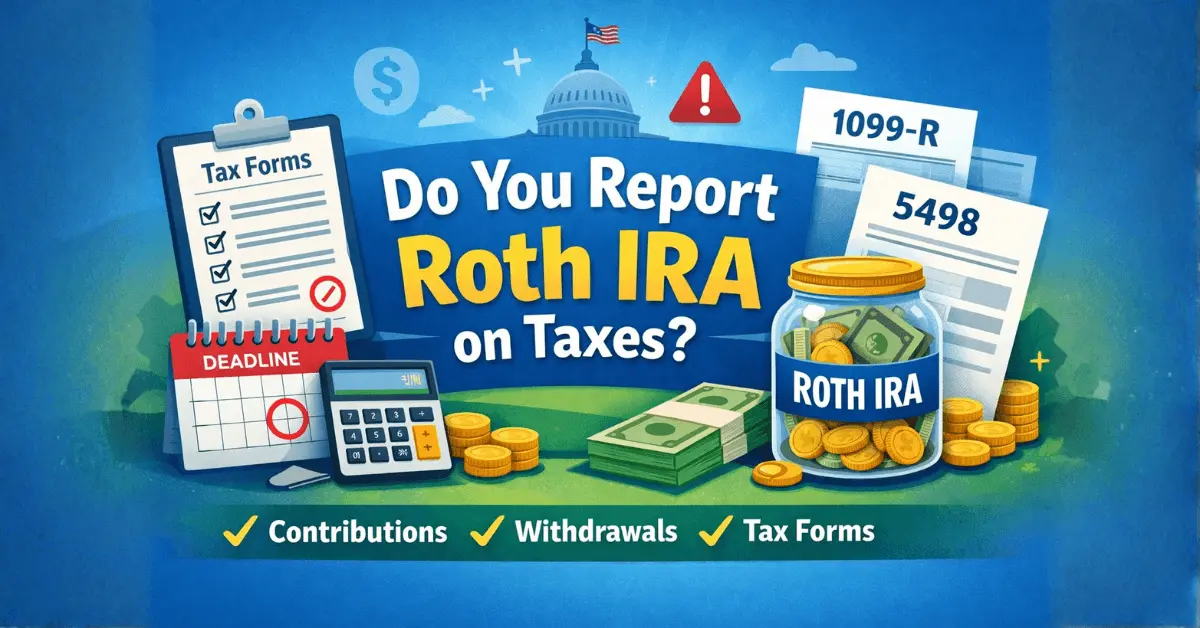
A Roth IRA is a special kind of savings account that helps you save money for when you get older and decide to stop working, like retirement. But what happens when you have a Roth IRA? Do you have to tell the IRS (the part of the government that collects taxes) about it when you file your taxes?
We’ll explain whether you need to report your Roth IRA on your taxes. We’ll cover:
- How Roth IRAs work.
- Whether you need to report contributions or withdrawals.
- What forms you might need to use for your Roth IRA.
You don’t need to worry about paying taxes on your Roth IRA if you follow the rules, but it’s important to understand how to handle it when it comes to taxes. Let’s break it down simply, step by step!
What is a Roth IRA and Why Does It Matter for Taxes?
A Roth IRA is a special savings account that you use to save money for the future, especially for when you stop working and retire. It’s different from a regular savings account because it helps your money grow without being taxed as it grows, and when you’re older, you can take out the money tax-free. Pretty cool, right?
How Does a Roth IRA Work?
When you put money into a Roth IRA, you are putting it into a special account that helps your money grow over time. The money can grow in different ways, like:
- Stocks (which are small pieces of companies),
- Bonds (loans to companies or the government),
- or a mix of these investments.
The best part is that, unlike a regular savings account, you don’t have to pay taxes on the money you make (called earnings) from the investments in your Roth IRA. This means that your money grows faster because you keep all of it!
Why Does It Matter for Taxes?
Even though the Roth IRA helps your money grow tax-free, there are still some rules to follow when it comes to taxes. Here’s where it gets a bit tricky:
- Contributions: The money you put into your Roth IRA (called contributions) is already taxed when you earn it. This means that you don’t pay taxes on it again when you put it into the Roth IRA. You don’t need to report the contributions on your taxes because you’ve already paid taxes on it.
- Earnings: The money your Roth IRA makes (called earnings) is not taxed while it’s in the account. However, if you take out the earnings too early (before you’re 59½ years old or before the account has been open for 5 years), you might have to pay taxes and penalties on it. This is why understanding when and how to report your Roth IRA matters!
Why Is It Important to Report a Roth IRA?
The IRS (the government organization that collects taxes) doesn’t ask you to report your Roth IRA contributions unless there’s something special going on, like if you contribute too much or withdraw earnings early. If you make a mistake, like contributing more than the allowed limit or withdrawing money before you’re supposed to, you might have to pay extra taxes or penalties.
In short, you generally don’t report your Roth IRA on your taxes unless:
- You withdraw money from it,
- You contribute too much to the account,
- Or there’s something else unusual about your Roth IRA activity.
Do You Need to Report Roth IRA Contributions?
When you put money into your Roth IRA, that money is called a contribution. Many people wonder if they need to report their contributions to the IRS when they file their taxes. The good news is that you don’t have to report your Roth IRA contributions on your tax return in most cases.
Why Don’t You Need to Report Contributions?
When you put money into a Roth IRA, you’ve already paid taxes on that money when you earned it. This means the IRS doesn’t need to know about it again because you aren’t getting a tax break right now. The money you put in just goes into your Roth IRA, where it can grow tax-free.
- Example: Let’s say you earned $6,000 at your job and you decided to put it into your Roth IRA. You’ve already paid taxes on that $6,000, so when you put it into your Roth IRA, you don’t need to report it to the IRS again.
What Happens if You Contribute Too Much?
Even though you don’t need to report your Roth IRA contributions on your taxes, there’s one exception: If you contribute too much money into your Roth IRA (more than the allowed yearly limit), then you need to report it.
For example:
- In 2026, the maximum contribution is $6,500 if you’re under 50 years old, and $7,500 if you’re 50 or older (this is called a catch-up contribution).
- If you put more than the allowed amount into your Roth IRA, you’ve made an excess contribution, and the IRS will want to know about it.
How to Fix an Excess Contribution
If you accidentally contribute too much to your Roth IRA, you have a few options:
- Withdraw the excess contribution: You can take the extra money out of your Roth IRA before the tax deadline (usually April 15) and avoid paying a penalty.
- Pay a penalty: If you don’t take the extra money out, the IRS will charge a 6% penalty on the excess amount every year until it is removed.
- Example: If you accidentally contribute $7,000 to your Roth IRA instead of $6,500, you’ve contributed $500 too much. You can withdraw the $500, and there won’t be a penalty. If you don’t withdraw it, you’ll pay a penalty of $30 ($500 x 6%) for that year.
What Form Will You Get for Contributions?
Even though you don’t report your contributions on your tax return, the IRS keeps track of them through Form 5498. This form is sent to you by your Roth IRA custodian (the company or bank that holds your Roth IRA). The form tells the IRS how much you’ve contributed to your Roth IRA during the year.
- You don’t need to file Form 5498 with your tax return, but keep it for your records, just in case.
Do You Need to Report Roth IRA Withdrawals?
Now that we’ve covered Roth IRA contributions, let’s talk about withdrawals. A withdrawal is when you take money out of your Roth IRA. Many people wonder if they need to report their Roth IRA withdrawals to the IRS when they file their taxes. The answer depends on what type of money you’re taking out and how old you are.
What Happens When You Take Out Contributions?
One of the best things about a Roth IRA is that you can take out your contributions (the money you originally put in) anytime you want, without paying taxes or penalties. You also don’t need to report these withdrawals to the IRS because you’ve already paid taxes on the money when you earned it.
- Example: Let’s say you put $5,000 into your Roth IRA and, after a few years, you decide you need $3,000. You can take out $3,000 of your contributions without paying any taxes or penalties. The IRS doesn’t need to know about it since you already paid taxes on that money.
What About Earnings?
Earnings are the money your Roth IRA makes from interest, dividends, or stock growth. When you take out earnings (the extra money your Roth IRA made), the rules are different.
- If you are under 59½ years old: You might have to pay taxes and a penalty on the earnings if you take them out early.
- If you are over 59½ years old: You can take out your earnings tax-free as long as the Roth IRA has been open for at least 5 years.
When Do You Report Roth IRA Earnings?
You only need to report Roth IRA earnings if you withdraw them early (before age 59½) or if the account hasn’t been open for 5 years. If you withdraw earnings and don’t meet the rules, the IRS will want to know about it so they can charge you taxes and penalties.
- Example: If you’re 45 years old and withdraw $2,000 in earnings from your Roth IRA, the IRS will require you to pay taxes on that $2,000, plus a 10% penalty for withdrawing it too early. You’ll have to report the withdrawal on your tax return.
What Forms Do You Get for Withdrawals?
When you take a withdrawal from your Roth IRA, the custodian (the company or bank that holds your Roth IRA) will send you Form 1099-R. This form shows how much money you took out, and whether any of it is taxable.
- Form 1099-R is the form that reports the distribution (money you withdrew). It will also show how much of that distribution is taxable (if any), so you can report it correctly when you file your taxes.
How to Report Roth IRA Withdrawals on Your Taxes
If you take a taxable withdrawal (meaning you take out earnings before meeting the age and 5-year rule), you will need to report it on your tax return. You’ll include the information from Form 1099-R to make sure the IRS knows how much money you took out.
- Example: If you withdraw $3,000 of earnings from your Roth IRA, Form 1099-R will show the amount of earnings, and you’ll report it on your taxes, paying any required taxes and penalties.
If you only withdraw contributions (the money you put in) and meet the rules, there’s no need to report it—it’s not taxable.
Taxable vs. Non-Taxable Events in a Roth IRA
Now that we’ve talked about Roth IRA contributions and withdrawals, it’s important to understand the difference between taxable and non-taxable events in a Roth IRA. This section will explain which events require you to pay taxes and which ones are tax-free.
Non-Taxable Events in a Roth IRA
There are many events in a Roth IRA that are non-taxable, meaning you don’t need to pay any taxes when they happen. Here are the most common non-taxable events:
- Contributions: The money you put into your Roth IRA (called contributions) is already taxed when you earn it. So, when you put it into the Roth IRA, it’s not taxed again. You don’t need to report your contributions to the IRS, and you don’t pay taxes on them when you take them out later.
- Example: If you put $6,000 into your Roth IRA, and later take out the same $6,000, there’s no tax because you’ve already paid taxes on it when you earned it.
- Qualified Withdrawals: If you follow the rules (such as waiting until you are 59½ years old and having the Roth IRA open for at least 5 years), your withdrawals are tax-free. This includes both your contributions and the earnings (the money your Roth IRA made from investments like stocks or bonds).
- Example: If you’re 60 years old and withdraw $20,000 after having the Roth IRA open for 5 years, that money is tax-free. You don’t have to pay taxes on your contributions or earnings.
- Roth IRA Growth: While your money is in a Roth IRA, it grows without you paying taxes on it. This is one of the biggest benefits of using a Roth IRA. The growth (like the earnings from investments) is tax-free as long as you follow the rules when you take the money out.
- Example: If you invested $6,000 and it grows to $9,000, the $3,000 growth is also tax-free when you take it out, as long as you meet the withdrawal rules.
Taxable Events in a Roth IRA
There are a few situations where you may need to pay taxes or penalties on your Roth IRA withdrawals. These are called taxable events, and they happen when the rules for Roth IRA withdrawals are not met.
- Early Withdrawals of Earnings: If you withdraw earnings (the money your Roth IRA made) before you turn 59½ years old or before the Roth IRA has been open for 5 years, you may have to pay taxes and a penalty. The penalty is usually 10%, and the earnings will also be taxed as regular income.
- Example: If you withdraw $3,000 in earnings from your Roth IRA at age 45, you’ll likely have to pay taxes on that $3,000, plus a 10% penalty for taking it out too early.
- Excess Contributions: If you contribute more than the allowed limit to your Roth IRA, you’ll have to pay a 6% penalty on the excess amount each year until you remove it. Excess contributions are considered a taxable event.
- Example: If you contribute $7,000 to your Roth IRA in a year when the limit is $6,500, you’ve contributed $500 too much. The IRS will charge you a 6% penalty on that extra $500 each year until you take it out.
Exceptions to Early Withdrawal Penalties
Even if you withdraw earnings before you’re 59½ or before the 5-year rule is met, there are some exceptions that allow you to withdraw without penalties. These exceptions include:
- First-Time Home Purchase: You can withdraw up to $10,000 in earnings for your first home purchase without paying the penalty, as long as the Roth IRA has been open for at least 5 years.
- Example: If you’ve had your Roth IRA for 5 years and you need $10,000 for a first-time home purchase, you can withdraw it without paying a penalty. However, you’ll still need to follow the tax rules.
- Qualified Education Expenses: You can take money out of your Roth IRA without paying the 10% penalty to pay for qualified education expenses, such as college tuition, books, and fees. You may still have to pay taxes on the earnings.
- Disability: If you become disabled, you can withdraw your Roth IRA earnings without paying the 10% penalty. You may still need to pay taxes on the earnings.
- Medical Expenses: If you have medical expenses that exceed 7.5% of your income, you can withdraw money from your Roth IRA without paying the 10% penalty, though you may still owe taxes on the earnings.
- Health Insurance: If you lose your job and need to pay for health insurance, you can also withdraw your Roth IRA earnings penalty-free.
Reporting Roth IRA Earnings
Now that we know when taxable and non-taxable events happen in a Roth IRA, it’s important to understand how to report Roth IRA earnings on your taxes. This section will explain when you need to report earnings, how to do it, and what forms you might receive.
What Are Roth IRA Earnings?
When we talk about Roth IRA earnings, we mean the money your Roth IRA makes from interest, dividends, or capital gains. These are the profits that come from the investments you make in the account, like stocks or bonds. Earnings grow tax-free while they are in the Roth IRA. But, if you take them out early (before age 59½ or before your Roth IRA has been open for 5 years), you might have to report them to the IRS and pay taxes and penalties.
When Do You Have to Report Roth IRA Earnings?
You don’t need to report Roth IRA earnings if you’re simply letting them grow in the account. But, if you withdraw earnings (take them out of your Roth IRA), then you might need to report them, depending on when and how much you withdraw.
- Withdrawals Before Age 59½ or 5-Year Rule: If you’re under 59½ years old and take out earnings, the IRS wants to know about it. You’ll need to report the withdrawal and pay taxes on the earnings, plus a 10% penalty.
- Example: If you’re 45 years old and withdraw $2,000 in earnings from your Roth IRA, you’ll need to report that on your taxes, and you’ll pay taxes on the $2,000, plus a 10% penalty for taking it out too early.
- Withdrawals After 59½ and the 5-Year Rule: If you’re over 59½ and the Roth IRA has been open for at least 5 years, then you can take the earnings tax-free. In this case, you don’t need to report anything, because it’s not taxable.
- Example: If you’re 60 years old and you’ve had your Roth IRA open for more than 5 years, and you take out $5,000 in earnings, you don’t need to report anything. It’s tax-free!
What Forms Do You Need for Roth IRA Earnings?
When you take money out of your Roth IRA, your Roth IRA custodian (the company or bank that manages your Roth IRA) will send you some important forms to help report your earnings to the IRS.
- Form 1099-R: This form is used to report any distributions (money you withdraw) from your Roth IRA. It will show how much you withdrew, whether it was taxable (like early earnings), and how much of it was tax-free (like contributions or qualified withdrawals).
- If you withdrew earnings and they are taxable, Form 1099-R will show that, and you will need to report the taxable earnings on your taxes.
- Form 5498: This form is sent to you by your Roth IRA custodian to report the contributions you made to your Roth IRA during the year. This form is important for keeping track of how much you’ve contributed, but it doesn’t directly affect your taxes.
How to Report Roth IRA Earnings on Your Tax Return
If you’ve made a taxable withdrawal (meaning you took out earnings early or didn’t meet the 5-year rule), you’ll need to include the taxable earnings on your tax return. Here’s how you do it:
- Fill out your tax return (Form 1040).
- Use Form 1099-R: Report the amount of taxable earnings you withdrew from your Roth IRA as shown on Form 1099-R.
- Pay taxes and penalties: If the withdrawal is taxable, you’ll need to pay taxes on the earnings, and possibly a 10% early withdrawal penalty if you’re under 59½ years old.
What If You Take Out Contributions?
Remember, if you withdraw only your contributions (the money you put in), you don’t need to report it to the IRS, because contributions are already taxed when you put them in the Roth IRA. You can take out contributions anytime without paying taxes or penalties, and you don’t need to report them on your tax return.
What to Do If You Contribute Too Much to Your Roth IRA
It’s important to understand the contribution limits for Roth IRAs, because if you put in more than the allowed amount, you could face some penalties. This section will explain what happens if you contribute too much to your Roth IRA, how to fix it, and how to avoid these mistakes in the future.
What Are the Contribution Limits for a Roth IRA?
The IRS sets limits on how much money you can contribute to your Roth IRA each year. For most people, the maximum contribution in 2026 is $6,500 if you’re under 50 years old. If you’re 50 or older, you can contribute an extra $1,000, making the limit $7,500.
- Example: If you’re 30 years old, you can put up to $6,500 into your Roth IRA for 2026. If you’re 55 years old, you can contribute $7,500.
What Happens If You Contribute Too Much?
If you contribute more than the allowed limit, the extra money is considered an excess contribution. The IRS doesn’t like excess contributions because they can mess with the tax-free growth of your Roth IRA. If you don’t fix the problem, the IRS will charge a penalty.
- The penalty is 6% of the excess contribution for each year that the extra money stays in your Roth IRA.
- Example: If you contribute $7,000 instead of $6,500, you’ve put in $500 too much. The IRS will charge you a 6% penalty on that extra $500 each year until you take it out. That means you’d pay a $30 penalty for each year the excess $500 stays in your Roth IRA.
How to Fix Excess Contributions
If you accidentally put more money into your Roth IRA than allowed, you can fix it! Here’s what you need to do:
- Withdraw the Extra Contribution: You need to take out the excess money as soon as possible. This means if you contributed too much in 2026, you’ll need to take out the extra amount before the tax deadline (usually April 15 of the following year). When you take out the extra contribution, you won’t have to pay a penalty.
- Example: If you contributed $7,000 instead of $6,500, you can take out the $500 extra by April 15. This way, you won’t pay a penalty.
- Pay the Penalty: If you don’t remove the extra contribution by the deadline, you’ll have to pay a 6% penalty for each year the excess money is in your Roth IRA.
- Example: If you leave the extra $500 in your Roth IRA for 2 years, you’d pay a $30 penalty for each year ($500 x 6% = $30). That means a total of $60 in penalties.
- File an Amended Tax Return: If you made an excess contribution in the past and didn’t fix it, you may need to file an amended tax return to correct your mistake. You can use Form 5329 to report and fix your excess contributions to the IRS.
What Happens to the Extra Money?
If you take the excess contribution out before the tax deadline, you’ll get back the money you put in. But if you leave it in the Roth IRA, it will count as an excess contribution and you will continue to pay penalties until you fix it.
- Example: If you don’t remove the $500 excess contribution, it will still be in the account, but each year, you will be charged the 6% penalty on that extra $500.
Why Are Excess Contributions a Problem?
The IRS wants to make sure everyone is following the rules, and if you contribute too much to your Roth IRA, you might not be able to enjoy the tax-free benefits properly. That’s why the penalties exist—to encourage people to stay within the contribution limits.
Key Forms for Reporting Roth IRA Activity
When you have a Roth IRA, there are a couple of important forms you’ll need to know about. These forms help you report your contributions, withdrawals, and other activities to the IRS. In this section, we’ll explain the two most common forms related to Roth IRAs: Form 1099-R and Form 5498.
Form 1099-R: Reporting Roth IRA Withdrawals
Form 1099-R is the form you’ll receive from the financial institution that holds your Roth IRA when you take a withdrawal. This form tells the IRS and you how much money you took out of your Roth IRA and whether any of it is taxable.
- When do you get Form 1099-R? You will receive this form if you take money out of your Roth IRA, whether it’s contributions or earnings.
- What’s on Form 1099-R? The form shows the total amount you withdrew, the portion of the withdrawal that is taxable (if any), and any penalties if you withdraw earnings early.
For example:
- If you’re 60 years old and take out $10,000 from your Roth IRA, and you’ve had the account open for 5 years, Form 1099-R will show the full $10,000 as tax-free, and you won’t need to pay any taxes or penalties.
However, if you’re under 59½ or haven’t met the 5-year rule, Form 1099-R will show how much of the withdrawal is taxable, and you may need to pay taxes and a penalty on the earnings.
Form 5498: Reporting Roth IRA Contributions
Form 5498 is another important form related to your Roth IRA. This form reports the contributions you made to your Roth IRA during the year. It’s used to keep track of how much you’ve contributed and whether you’re staying within the annual contribution limits.
- When do you get Form 5498? You will receive this form from your Roth IRA custodian (the bank or company where you have your Roth IRA). It’s usually sent to you by May 31 of the following year.
- What’s on Form 5498? This form will show the total amount of contributions you made during the year, as well as any rollovers or conversions that took place. It also shows if you made any catch-up contributions (if you’re 50 or older).
Even though Form 5498 reports the contributions, you don’t need to file it with your taxes. Instead, you use it for your records and to help ensure you’re staying within the contribution limits.
- Example: If you contributed $6,000 to your Roth IRA in 2026, Form 5498 will show that amount. If you’re 55 years old, the form will show you contributed the $6,000 (plus an additional $1,000 catch-up contribution).
How These Forms Help You
- Form 1099-R helps you report withdrawals to the IRS, so they know how much you took out, and whether you owe taxes or penalties.
- Form 5498 helps you keep track of your contributions, ensuring you don’t exceed the contribution limits and helping the IRS know that you’re following the rules.
What If You Don’t Get the Forms?
If you don’t receive these forms, it’s important to reach out to your Roth IRA custodian. They should send you both Form 1099-R and Form 5498 by the required dates. If you don’t get them, make sure to follow up so you can report your Roth IRA activity correctly.
Conclusion
We’ve covered a lot about Roth IRAs and how they relate to taxes, so let’s quickly recap everything we’ve learned.
What We Learned About Reporting Roth IRAs
- Contributions: You don’t need to report Roth IRA contributions on your tax return because they’re already taxed when you earn them. However, if you contribute too much to your Roth IRA, you’ll need to report the excess amount and fix the mistake to avoid penalties.
- Withdrawals: When you take money out of your Roth IRA, whether it’s contributions or earnings, you might need to report it. If you withdraw earnings before you’re 59½ or before the Roth IRA has been open for 5 years, you’ll need to pay taxes and possibly penalties.
- Tax-Free Withdrawals: If you meet the age requirement and the 5-year rule, your withdrawals (both contributions and earnings) are tax-free and don’t need to be reported.
- Important Forms:
- Form 1099-R: This form reports your Roth IRA withdrawals to the IRS. It shows how much you took out, whether it’s taxable, and if you owe any penalties.
- Form 5498: This form reports your contributions to your Roth IRA and helps ensure you don’t exceed the contribution limits.
Why It’s Important to Understand These Rules
Knowing the rules about Roth IRA reporting helps you avoid mistakes that could lead to taxes or penalties. Roth IRAs are a great way to save for retirement because of their tax-free growth and tax-free withdrawals in the future. But to make sure you don’t run into trouble with the IRS, it’s important to understand when and how to report your Roth IRA activities.
Final Tip
The key takeaway is that Roth IRA contributions don’t need to be reported, but withdrawals and excess contributions do. Always make sure you’re within the contribution limits, and if you ever need to take out earnings early, know that there could be taxes and penalties.
If you ever feel unsure about what to report, it’s a good idea to ask a tax professional for help. They can make sure your Roth IRA is in good standing with the IRS.
Now that you understand how to handle your Roth IRA on your taxes, make sure to stay on top of your contributions and withdrawals. By following the rules, you can enjoy the full tax benefits of your Roth IRA when you retire!