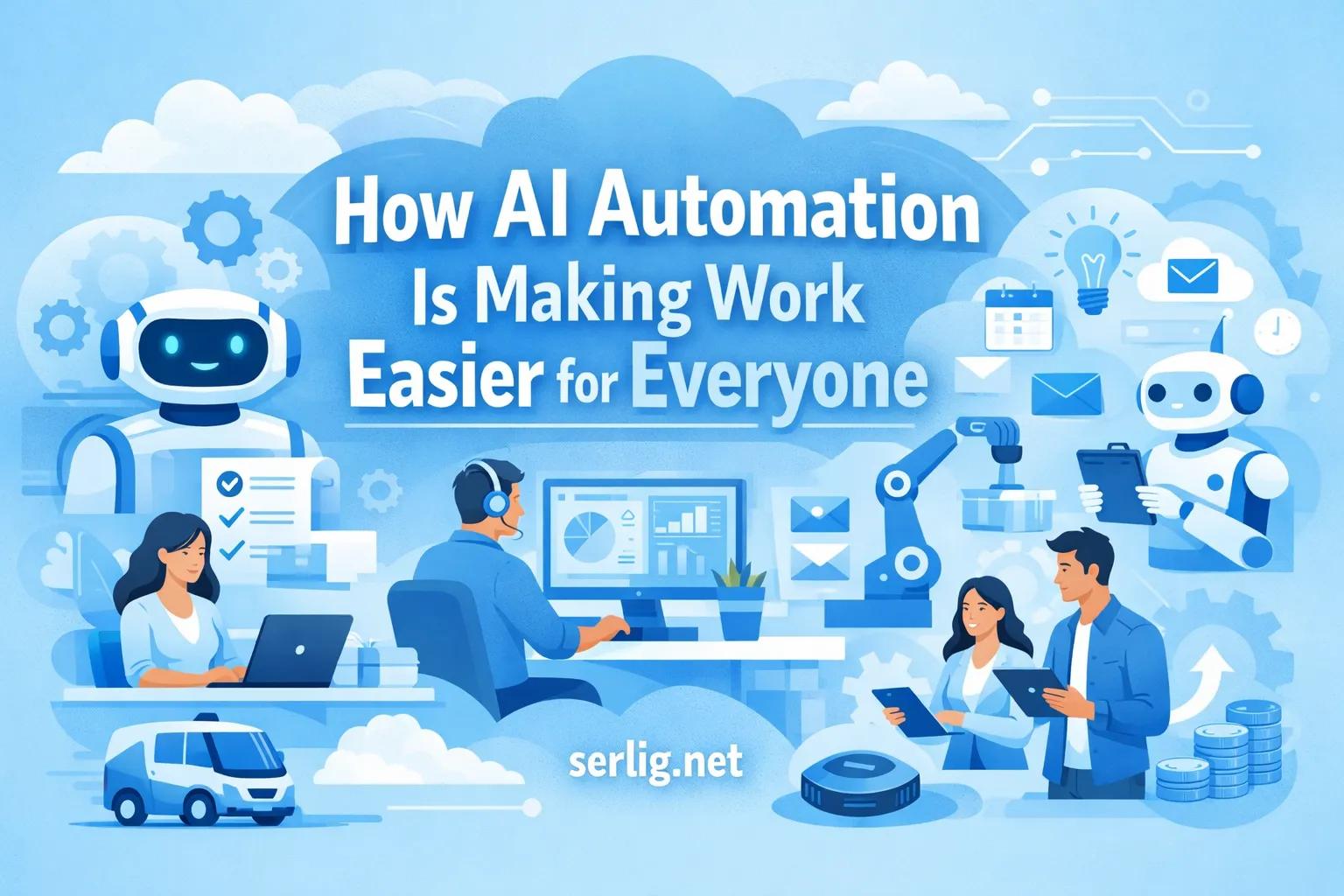
Work has changed dramatically over the last decade, and AI automation is one of the biggest reasons why. Tasks that once required hours of manual effort can now be completed in minutes. Emails are drafted automatically, data is analyzed in real time, customer questions are answered instantly, and workflows run smoothly without constant human intervention. What once felt complex and exhausting is becoming simpler, faster, and more manageable.
This shift is not about replacing people. Instead, AI automation, powered by AI development services, is about removing friction from work. It handles repetitive, rule-based, and time-consuming tasks so individuals and teams can focus on creative thinking, problem-solving, and meaningful collaboration. From employees and managers to business owners and frontline workers, automation is quietly improving how work gets done.
In this article, we explore how AI automation is making work easier for everyone, across industries and roles. We will look at real-world examples, practical use cases, and the human impact of automation. By the end, you will understand why AI automation is not just a productivity tool, but a key driver of better work experiences and smarter organizations.
ALSO READ :: Fontlu: The Future of Font Management & Customization with AI-Driven Discovery for Designers
What AI Automation Really Means in the Workplace
AI automation goes beyond basic task automation. Traditional automation follows fixed rules. AI automation, on the other hand, can learn from data, adapt to patterns, and improve over time. This makes it far more useful in real-world work environments, where tasks are rarely identical.
In the workplace, AI automation typically combines machine learning, natural language processing, and intelligent workflows. Together, these technologies handle tasks such as document processing, customer support routing, scheduling, forecasting, and decision assistance.
For example, instead of manually reviewing hundreds of resumes, AI automation tools can screen applications, identify relevant skills, and shortlist candidates. In finance teams, AI can automatically categorize expenses, flag anomalies, and generate reports. In customer service, AI-powered systems can respond to common queries and route complex issues to the right agent.
A key long-tail concept here is intelligent workflow automation, where AI does not just execute tasks but understands context. This reduces human effort while increasing accuracy.
The real value of AI automation is not speed alone. It is cognitive relief. When people no longer need to track, remember, or repeat routine steps, mental load drops significantly. This leads to clearer thinking and better decisions.
How AI Automation Reduces Everyday Workload
One of the most immediate benefits of AI automation is how it lightens everyday workloads. Many professionals spend a large portion of their day on repetitive tasks that add little strategic value. Automation directly targets this problem.
AI automation simplifies work by:
- Handling repetitive administrative tasks
- Reducing manual data entry and duplication
- Automatically organizing information
- Triggering actions without human follow-up
For example, AI-powered email assistants can summarize long threads, suggest replies, and prioritize urgent messages. Calendar automation tools schedule meetings based on availability without endless back-and-forth. In operations teams, automated workflows ensure approvals, notifications, and updates happen on time.
Making Knowledge Work Smarter and Faster
Knowledge workers such as analysts, marketers, developers, and consultants rely heavily on information processing. AI automation transforms how this work is done by accelerating research, analysis, and content creation.
AI tools can:
- Analyze large datasets and highlight insights
- Generate first drafts of documents, reports, and presentations
- Summarize research and extract key points
- Assist with coding, testing, and debugging
For professionals working in software development and quality assurance, automation platforms such as Tricentis Tosca are widely used to streamline testing processes. Many testers improve their skills through TOSCA Training to learn how to design efficient automated test cases and improve software reliability..
Improving Collaboration and Team Efficiency
AI automation also makes teamwork easier. Many collaboration challenges arise from poor coordination, missed updates, and unclear ownership. Automation addresses these issues by ensuring information flows smoothly between people and systems.
Examples include:
Automated task assignments based on workload
AI-generated meeting summaries and action items
Workflow tools that track progress in real time
Automated reminders and follow-ups
Content creation tools such as an AI video maker that allow marketing teams to quickly produce campaign videos without heavy manual editing
These systems reduce the need for constant check-ins and status meetings while enabling teams to deliver creative outputs faster.
How AI Automation Helps Managers and Leaders
Managers often struggle with information overload, performance tracking, and decision-making under pressure. AI automation helps by providing clarity and reducing micromanagement.
With AI automation, managers can:
- Monitor performance through real-time dashboards
- Receive alerts when attention is needed
- Automate routine approvals and reporting
- Forecast outcomes using predictive analytics
Instead of chasing updates, leaders receive insights when they matter. This improves decision speed and quality while freeing time for coaching and strategic planning.
Making Work More Accessible and Inclusive
One often overlooked benefit of AI automation is accessibility. Automation tools make work easier for people with different abilities, experience levels, and working styles.
Examples include:
- Speech-to-text tools for those with mobility challenges
- Language translation for global teams
- Smart assistants that guide new employees
- Automated checks that reduce reliance on tribal knowledge
By lowering barriers, AI automation helps more people contribute effectively. It reduces dependence on institutional memory and makes knowledge available to everyone.
Real-World Examples of AI Automation at Work
Across industries, AI automation is already delivering measurable impact.
In customer support, automated chat systems handle common queries instantly, reducing wait times and agent workload. In HR, onboarding workflows automatically provision tools, schedule training, and guide new hires. In finance, automation closes books faster and improves accuracy.
Manufacturing and logistics teams use AI automation to predict delays, optimize routes, and reduce downtime. Healthcare professionals use automation to handle documentation, allowing more time for patient care.
The most successful automation efforts start small. Teams automate one pain point, see results, and expand gradually. This builds trust and adoption.
Addressing Fears and Misconceptions About Automation
Despite its benefits, AI automation still raises concerns about job loss and loss of control. In reality, most organizations use automation to augment human work, not eliminate it.
Common misconceptions include:
- Automation replaces all jobs
- AI removes human decision-making
- Automation is too complex to manage
In practice, automation usually shifts roles rather than removes them. Employees spend less time on routine work and more time on creative and interpersonal tasks. When implemented thoughtfully, automation increases job quality.
Conclusion
AI automation is reshaping work in ways that are deeply human. Removing repetitive tasks, reducing cognitive overload, and improving collaboration make work easier, clearer, and more fulfilling. Employees gain time and focus. Managers gain visibility and confidence. Organizations gain speed and resilience.
The key takeaway is simple. AI automation works best when it supports people, not replaces them. When designed around real workflows and human needs, automation becomes an invisible helper that improves everyday work without getting in the way.
If you are exploring AI automation, start by identifying tasks that drain time and energy. Automate those first. The impact will be immediate and meaningful.