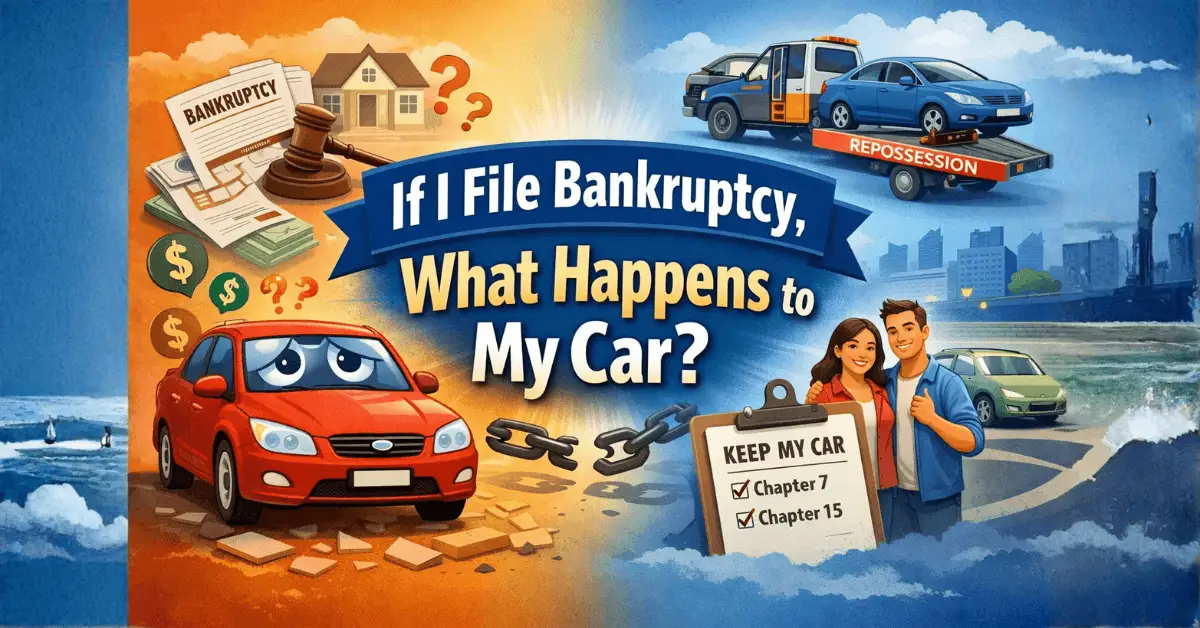
What Happens to My Car if I File for Bankruptcy?
When people have a lot of debt and can’t pay it back, they may choose to file for bankruptcy. Bankruptcy is a legal way to get some relief and a fresh start. But what about your car? Many people worry that they might lose their car when they file for bankruptcy, especially if they still owe money on it.
In simple terms, bankruptcy can affect your car in different ways depending on the type of bankruptcy you file. Sometimes you can keep your car even after filing, but other times, it might be sold to pay back your debts.
We’ll explain:
- What happens to your car in Chapter 7 and Chapter 13 bankruptcy.
- How you might be able to keep your car during bankruptcy.
- What happens if your car is already repossessed before you file.
- Other options you can explore if you want to keep your car without filing for bankruptcy.
Don’t worry – we’ll break it down step-by-step so you can easily understand what might happen to your car if you file for bankruptcy!
Types of Bankruptcy and Their Impact on Your Car
When you file for bankruptcy, there are two main types: Chapter 7 and Chapter 13. Each type works differently, and how they affect your car depends on which one you choose. Let’s look at each type and what happens to your car in each case.
1. Chapter 7 Bankruptcy and Your Car
Chapter 7 bankruptcy is the most common type of personal bankruptcy. In Chapter 7, the goal is to quickly wipe out most of your debts. However, it might mean selling some of your stuff to pay back what you owe. This includes things like cars, electronics, or jewelry.
But don’t worry! Not everything is sold. There are special exemptions that protect some property, like your car. The rules depend on the state you live in, but most people are able to keep their car if it’s not worth much or if they’re making regular payments on it.
- What Happens to Your Car:
- If you own your car outright (meaning you don’t owe any money on it), the bankruptcy trustee may sell it, unless it’s protected by an exemption.
- If you still owe money on your car loan (which is called a secured debt), you can usually keep the car as long as you keep making your car payments. In Chapter 7, you may have the option to reaffirm the loan. Reaffirmation means agreeing to continue paying the car loan, even after bankruptcy.
- Example:
- Let’s say Sarah files for Chapter 7 bankruptcy, and she owes $5,000 on her car loan. If her car is worth $6,000, and her state has a $3,000 exemption, the car would be protected, and she could keep it. However, she still has to make her monthly payments to keep the car.
2. Chapter 13 Bankruptcy and Your Car
Chapter 13 bankruptcy is different because it involves making a payment plan to pay back some of your debts over a period of 3 to 5 years. Unlike Chapter 7, you usually keep your property, including your car. The main difference is that the court may restructure your car loan as part of the payment plan.
- What Happens to Your Car:
- You get to keep your car as long as you continue making payments according to your plan.
- If you’re behind on car payments, Chapter 13 can help you catch up by including the missed payments in your plan. You might also get a lower interest rate on your car loan if the court allows it.
- If you owe more on your car than it’s worth (this is called being “upside-down” on your loan), Chapter 13 may allow you to pay only the fair market value of the car, which can reduce your debt.
- Example:
- John is filing for Chapter 13 bankruptcy. He owes $15,000 on a car loan, but his car is only worth $10,000. The court approves a plan where John only has to pay back $10,000 (the value of the car) over 5 years, and he gets to keep his car.
Will I Lose My Car if I File for Bankruptcy?
One of the biggest concerns people have when filing for bankruptcy is whether they will lose their car. The good news is that you don’t necessarily have to lose your car just because you file for bankruptcy. The outcome depends on a few factors, such as the type of bankruptcy you file for, your car’s value, and whether you’re behind on your car payments.
1. If You’re Behind on Payments and File for Bankruptcy
If you’re behind on your car payments, filing for bankruptcy can offer some protection, but it doesn’t automatically mean you’ll get to keep your car. Here’s how it works in both Chapter 7 and Chapter 13:
- In Chapter 7 Bankruptcy:
- If you’re behind on your car loan and can’t catch up, the lender might repossess your car. However, filing for Chapter 7 temporarily stops repossession through something called the automatic stay. This means that as soon as you file for bankruptcy, the lender can’t take your car right away.
- If you want to keep your car, you’ll need to catch up on your payments or reaffirm the loan, which means you agree to keep making payments on your car loan even after bankruptcy.
- If you can’t afford to keep up with your payments, the lender may still take back the car after a few months, but the bankruptcy will help reduce some of the other debt you owe.
- In Chapter 13 Bankruptcy:
- If you’re behind on your car payments, Chapter 13 gives you a chance to catch up on those payments as part of your repayment plan. You can keep your car if you stick to the plan and make your payments.
- Chapter 13 is more forgiving than Chapter 7 because it allows you to restructure your debt, making it easier to catch up on car payments and other bills.
- Example:
- Anna is behind on her car payments by 3 months, and her car is at risk of repossession. She files for Chapter 13 bankruptcy. Under the repayment plan, Anna can catch up on her missed payments and avoid losing her car, while also paying other debts in the plan.
2. If Your Car Is Already Repossessed Before Filing for Bankruptcy
If your car has already been repossessed before you file for bankruptcy, filing may help you get your car back. This depends on the type of bankruptcy you file and when you file.
- In Chapter 7 Bankruptcy:
- The automatic stay temporarily stops the repossession process, which may give you time to catch up on your payments or negotiate with the lender.
- However, if the car has already been sold, you may not be able to get it back. In that case, you can discharge the remaining debt (if any) you owe on the car, but you’ll lose the car.
- In Chapter 13 Bankruptcy:
- If your car has been repossessed, filing for Chapter 13 gives you the opportunity to catch up on missed payments and potentially get your car back.
- You may need to work with your lender and the bankruptcy court to arrange a payment plan to reclaim your car.
- Example:
- Tim’s car was repossessed last month because he was behind on payments. He files for Chapter 13 bankruptcy and works out a plan to catch up on his payments. The court allows him to get his car back and pay off the loan over time.
How to Keep Your Car During Bankruptcy
Many people want to know how they can keep their car when they file for bankruptcy. The good news is that it’s possible to keep your car, but it depends on the type of bankruptcy you file and whether you’re able to make your car payments. Let’s break down the steps for keeping your car in Chapter 7 and Chapter 13 bankruptcy.
1. Keeping Your Car in Chapter 7 Bankruptcy
Chapter 7 bankruptcy is a liquidation process where some of your assets may be sold to pay off your debts. However, you may still be able to keep your car, especially if it’s protected by an exemption or if you’re making payments on a secured car loan.
- Reaffirming Your Car Loan:
- If you have a car loan and you want to keep your car, you may be able to reaffirm the loan. This means you agree to continue making payments on the car loan, even after bankruptcy. The car loan is not erased, and you’re still responsible for paying it off.
- Reaffirmation is an agreement between you and the lender that allows you to keep the car while still paying back the loan. The bankruptcy court will approve the reaffirmation agreement.
- Exemptions:
- Each state has exemption laws that protect certain assets from being sold during bankruptcy. If your car is worth less than the exemption amount in your state, you can likely keep it. If it’s worth more, the bankruptcy trustee may sell it to pay creditors.
- For example, if your car is worth $6,000 and your state’s exemption amount for cars is $3,000, the trustee may sell the car and give you $3,000, but you’ll lose the car.
- Example:
- Sarah owes $4,000 on her car loan, and her car is worth $7,000. After filing for Chapter 7 bankruptcy, Sarah reaffirms the loan with her lender, agreeing to keep making monthly payments. Since the car’s value is protected by her state’s exemption, she gets to keep her car.
2. Keeping Your Car in Chapter 13 Bankruptcy
Chapter 13 bankruptcy is a reorganization process where you create a payment plan to pay off some of your debts over 3 to 5 years. In Chapter 13, you keep your car as long as you keep up with the new payment plan.
- Restructuring Your Car Loan:
- One of the main benefits of Chapter 13 is that it allows you to catch up on missed payments and lower your car loan payments if needed.
- If you’re behind on payments, the court may include the missed payments in your repayment plan, giving you a chance to get back on track without losing your car.
- Chapter 13 also offers the possibility of reducing the amount you owe on your car if you’re upside down (meaning you owe more than your car is worth).
- Example:
- Tom owes $15,000 on a car loan, but his car is only worth $10,000. Tom files for Chapter 13 bankruptcy, and the court allows him to pay only $10,000, the car’s value, over his 5-year repayment plan. This means he gets to keep his car and save money.
3. What Happens If You Can’t Afford to Keep Your Car?
If you’re unable to afford your car loan payments, bankruptcy might offer relief by allowing you to discharge the remaining debt. But this might also mean losing your car, especially in Chapter 7.
- In Chapter 7:
- If you don’t want to keep the car, the bankruptcy trustee might sell it to pay off your creditors. However, you’ll no longer be responsible for the remaining loan after the car is sold, as the debt can be discharged.
- In Chapter 13:
- If you can’t afford your car payments, you might have the option to surrender the car and have the remaining car loan debt discharged. This means you give the car back to the lender, and the remaining debt may be wiped out through the bankruptcy process.
- Example:
- Amy has a car loan she can’t afford, and she files for Chapter 13 bankruptcy. She decides to surrender the car, and after returning it, her remaining debt is discharged, allowing her to move forward without the financial burden of the car loan.
What If My Car Is Already Repossessed?
If your car has already been repossessed before you file for bankruptcy, you may still be able to get it back. The good news is that bankruptcy can help stop repossession and even give you a chance to reclaim your car in certain situations. Here’s how bankruptcy can help if your car has already been taken.
1. Stopping Repossession with Bankruptcy
Once you file for bankruptcy, something called the automatic stay goes into effect. The automatic stay is a legal rule that stops most collection actions, including repossession. This means that even if your car is being repossessed or has already been repossessed, the process must stop once you file for bankruptcy.
- How It Works:
- The automatic stay temporarily halts the repossession process, giving you time to figure out your next steps.
- If your car has been repossessed, filing for bankruptcy might allow you to work out a plan to get your car back, especially in Chapter 13 bankruptcy.
- Example:
- Rachel’s car was repossessed because she couldn’t keep up with her payments. She filed for Chapter 13 bankruptcy, and the repossession process was stopped. The bankruptcy court allowed her to include her missed payments in her repayment plan, giving her a chance to keep her car.
2. Getting Your Car Back in Chapter 13 Bankruptcy
In Chapter 13 bankruptcy, if your car has been repossessed, you may be able to get it back as part of your repayment plan. Here’s how:
- Catch Up on Payments: In Chapter 13, you can catch up on your missed car payments by including them in your repayment plan. This means that over the course of 3 to 5 years, you’ll pay back the missed payments and get your car back.
- Reaffirmation Agreement: If your car is still at risk of being sold, you may be able to sign a reaffirmation agreement to continue paying for the car and keep it.
- Secured Debt in Chapter 13: Car loans are secured debts, meaning the car itself is the collateral. As long as you are working with the bankruptcy court to pay off your debt, you might be able to get the car back or avoid it being sold.
- Example:
- Brian’s car was repossessed after he fell behind on payments. After filing for Chapter 13, he worked with his bankruptcy trustee and included his car loan payments in the plan. As he made his payments, he was able to get his car back.
3. Getting Your Car Back in Chapter 7 Bankruptcy
In Chapter 7 bankruptcy, it’s a bit more complicated if your car has already been repossessed. The court can stop repossession with the automatic stay, but the process is quicker and more final in Chapter 7 compared to Chapter 13.
- Repossessed and Sold: If your car has already been repossessed and sold, you can no longer get it back. However, filing for Chapter 7 bankruptcy may discharge the remaining debt you owe on the car loan, leaving you with less financial burden.
- Example:
- James’s car was repossessed and sold before he filed for Chapter 7 bankruptcy. While he couldn’t get the car back, he was able to discharge the remaining debt on the car loan, meaning he didn’t owe any more money on it.
4. What Happens If You Don’t Get Your Car Back?
If you can’t get your car back, or if it’s already sold, filing for bankruptcy may still help in several ways:
- Discharge of Debt: If the car was sold for less than what you owe, the remaining debt may be discharged (forgiven) in bankruptcy. This means you won’t have to pay the balance of the car loan.
- No More Repossession: Once your car is repossessed, the lender can’t keep coming after you to take another vehicle or collect the balance of the loan if it’s discharged in bankruptcy.
- Example:
- After Lisa’s car was repossessed and sold, she filed for Chapter 7 bankruptcy. The court discharged the remaining balance on her car loan, so she didn’t owe any more money for the car, even though she didn’t get it back.
Alternatives to Bankruptcy for Keeping Your Car
While bankruptcy can help protect your car, it’s not the only option if you’re struggling with your car loan. There are other ways to avoid bankruptcy and still keep your car. Here are some alternatives to consider if you’re trying to keep your vehicle without filing for bankruptcy.
1. Refinancing Your Car Loan
If you’re having trouble keeping up with car payments but don’t want to file for bankruptcy, refinancing your car loan might be a good option. Refinancing means taking out a new loan to pay off your current car loan, often with better terms such as a lower interest rate or lower monthly payments.
- How It Works:
- You apply for a new loan with a lender that will pay off your current loan. In return, you’ll have a new monthly payment plan.
- Refinancing may give you a longer time to pay off the loan, which could lower your monthly payments, making it easier to keep up.
- If you have good credit, refinancing is more likely to result in better loan terms, but even with bad credit, some lenders may offer refinancing options.
- Benefits:
- Lower monthly payments and interest rates can make your car loan more affordable.
- You can keep your car and avoid bankruptcy.
- Example:
- Sam was struggling with high monthly car payments. He refinanced his car loan with a new lender and lowered his monthly payments by $150. This helped him keep the car and avoid bankruptcy.
2. Work with Your Lender
If you’re behind on your car payments and worried about losing your car, try talking to your lender before considering bankruptcy. Lenders don’t want to repossess your car because it’s a hassle for them too. They may be willing to work with you to avoid repossession and bankruptcy.
- What You Can Do:
- Request a Payment Extension: Some lenders might allow you to skip a payment or delay payments temporarily if you’re going through a difficult time.
- Lower Your Interest Rate: If you’re paying a high interest rate, ask if they can lower it to make your monthly payments more manageable.
- Modify Your Loan Terms: You can ask to extend the loan term to lower monthly payments or change the loan structure.
- Benefits:
- You might be able to lower your payments without filing for bankruptcy.
- You can keep your car and avoid the long-term credit damage caused by bankruptcy.
- Example:
- Karen fell behind on her car payments due to medical bills. She contacted her lender and was able to extend the loan term, which reduced her monthly payment, helping her keep the car without filing for bankruptcy.
3. Debt Consolidation
If you have other debts besides your car loan, debt consolidation could be an option. Debt consolidation combines multiple debts into one loan with a single monthly payment. This can make managing your payments easier and might help you stay on top of your car loan payments.
- How It Works:
- You take out a consolidation loan to pay off all your existing debts, including your car loan.
- You then make one monthly payment to the consolidation loan provider, which can be lower than the total amount you were paying on your debts.
- Benefits:
- You only have to make one payment instead of juggling multiple bills.
- Lower monthly payments could make it easier to keep up with your car loan payments.
- Example:
- Dave had multiple credit card bills and a car loan. He used debt consolidation to combine his debts into one loan, lowering his monthly payments and making it easier to keep up with his car loan.
4. Selling the Car or Trading It In
If keeping your car is becoming too difficult and you don’t want to file for bankruptcy, you might want to consider selling the car or trading it in for a less expensive vehicle. While this option means you’ll lose your car, it could help you avoid bankruptcy and reduce your debt.
- How It Works:
- You sell your car and use the money to pay off the car loan. If you owe more than the car is worth, you may need to make up the difference with savings or a personal loan.
- Alternatively, you can trade in your car at a dealership to buy a more affordable one, which could lower your car payments and help you manage your debt.
- Benefits:
- Selling or trading in your car can help you eliminate your car loan debt and reduce your financial burden.
- It’s a way to avoid bankruptcy without losing everything.
- Example:
- Mia had a car with a loan balance of $20,000, but the car was only worth $15,000. She sold the car, paid off the loan, and used the remaining money to buy a less expensive car, reducing her monthly payments.
Emotional and Psychological Impact of Losing Your Car in Bankruptcy
Filing for bankruptcy and potentially losing your car can be an emotional experience. It’s not just about the financial impact — it’s also about the stress, anxiety, and feelings of loss that can come with it. Here’s how losing your car during bankruptcy can affect your mental and emotional well-being, and how you can cope with these feelings.
1. Stress and Anxiety
When you’re facing bankruptcy and the possibility of losing your car, it’s natural to feel stressed and anxious. Your car is not just a mode of transportation — it’s often tied to your independence, daily routine, and ability to go to work or take care of your family. The idea of losing your car can feel like losing control over your life.
- How It Helps:
- While bankruptcy may feel overwhelming, it also offers relief from the stress of dealing with unmanageable debt. Filing for bankruptcy stops collection calls and may provide a way to catch up on missed car payments or get out from under a car loan that’s too difficult to manage.
- Coping Strategies:
- Take things one step at a time. Focus on what you can control, like working with your bankruptcy trustee or negotiating with your lender.
- Talk to someone — whether it’s a family member, friend, or financial counselor — to share your feelings and get support.
2. Feelings of Shame or Failure
Many people feel ashamed or like they’ve failed when they file for bankruptcy. There’s often a stigma around bankruptcy, and the thought of losing your car can make you feel like you’ve let yourself down or that others might judge you.
- How to Cope:
- It’s important to remind yourself that bankruptcy is a legal tool designed to help people in financial distress. Filing for bankruptcy is not a sign of failure, but a step toward rebuilding your financial future.
- Focus on recovery: Take small steps to rebuild your credit and financial habits after bankruptcy, and remember that everyone goes through tough times.
- Coping Strategies:
- Talk to people who have gone through bankruptcy. You’ll likely find that many people feel the same way, but the process can help you get back on your feet.
- Consider joining a support group for people who have faced financial struggles, as hearing others’ stories can help you feel less alone.
3. Loss of Independence
For many, a car is more than just a vehicle; it represents independence and freedom. Losing your car can feel like losing a part of your identity, especially if it affects your ability to go to work, run errands, or take care of your family.
- How to Cope:
- If you do end up losing your car, look for alternative ways to maintain your independence. You might be able to use public transportation, carpooling, or rideshare services to get where you need to go.
- Some communities offer low-cost car options or public transportation programs for people going through financial hardship.
- Coping Strategies:
- Focus on creative solutions for transportation, like borrowing a car from a friend or family member in the short term, or exploring options like leasing a car that’s more affordable.
- Use this as an opportunity to re-evaluate your priorities and consider how you can better manage your finances in the future.
4. Long-Term Financial Confidence
After filing for bankruptcy, even if you lose your car, the goal is to regain financial confidence and learn how to manage your money better moving forward. Bankruptcy provides a fresh start, and while it might take time to rebuild your credit, it can help you get back on the right track.
- How to Cope:
- Use bankruptcy as a learning experience. Understand why your finances got to this point, and create a plan for making better financial decisions in the future.
- Rebuild your credit: Start small by paying off any remaining debt on time, using a secured credit card, and tracking your spending.
- Coping Strategies:
- Set small goals: Start by creating a budget and sticking to it. Celebrate your progress as you work to improve your financial situation.
- Reach out for financial counseling to help you set clear goals for the future and stay on track.
Conclusion: Next Steps After Filing for Bankruptcy
Filing for bankruptcy is a big decision, and while it provides a fresh start, it doesn’t mean the journey to financial recovery ends there. After filing, you’ll need to focus on rebuilding your financial life. Whether you lost your car or are working to keep it, there are steps you can take to regain your financial confidence and start moving forward.
1. Rebuild Your Credit
One of the most important steps after filing for bankruptcy is rebuilding your credit. It might take time, but it’s possible to improve your credit score with the right steps.
- How to Rebuild:
- Start by paying all bills on time, even if it’s just a small amount. Timely payments are one of the biggest factors in rebuilding your credit.
- Consider getting a secured credit card. This is a credit card where you put down a deposit as collateral. By using it responsibly and paying off the balance each month, you can begin rebuilding your credit.
- Keep your credit utilization low (don’t max out your credit cards). This will help improve your credit score over time.
- Example:
- After filing for bankruptcy, Jane opened a secured credit card and paid off her balance each month. Over the next two years, her credit score went from 450 to 650, putting her in a much better position for future loans.
2. Create a Budget
A solid budget is essential for ensuring you don’t fall into financial trouble again. After bankruptcy, it’s important to live within your means and avoid taking on new, unmanageable debt.
- How to Create a Budget:
- List all of your income sources (salary, benefits, etc.) and monthly expenses (rent, utilities, car payment, groceries, etc.).
- Allocate a certain amount of money for savings each month, even if it’s just a small amount.
- Make adjustments if necessary to avoid spending more than you earn, and track your expenses to stay on top of your financial goals.
- Example:
- After filing for bankruptcy, Tom created a simple budget. He tracked his income and expenses, reduced unnecessary spending, and started saving a little each month. This helped him avoid going back into debt.
3. Consider Alternatives to Debt
If you’re still dealing with debt after bankruptcy or have other financial challenges, consider alternative ways to manage your money without taking on more debt.
- Debt Consolidation: If you still have multiple debts, consider consolidating them into one loan with a lower interest rate. This can make it easier to manage your payments.
- Credit Counseling: A credit counselor can help you make a debt repayment plan and improve your overall financial health. They can also offer tips on budgeting and managing money.
- Refinancing: If you have a car loan or mortgage, you might be able to refinance to lower your interest rate or adjust your monthly payments to make them more affordable.
- Example:
- Sarah worked with a credit counselor after her bankruptcy to create a manageable debt repayment plan. This helped her stay on track and avoid taking on any new debt.
4. Understand Your New Financial Situation
Now that you’ve filed for bankruptcy, it’s essential to understand your new financial situation. Bankruptcy may have wiped out a lot of your debt, but you might still be responsible for certain types of debt, like student loans, child support, or taxes.
- What You Should Know:
- Make sure you know which debts were discharged and which ones you still owe.
- Understand your new credit score and how it can impact your ability to get loans or credit cards in the future.
- Example:
- Mark filed for bankruptcy and discharged his credit card debt, but his student loans were not affected. He made sure to plan for paying his student loans on time, while also focusing on rebuilding his credit.
Final Thoughts
Filing for bankruptcy can feel like a difficult and emotional decision, but it can also be a fresh start that helps you take control of your finances again. After bankruptcy, it’s important to take steps to rebuild your credit, create a budget, and avoid falling back into debt. Whether you kept your car or had to give it up, the key is to stay positive and work toward building a stronger financial future.
Remember, bankruptcy is just one part of the journey. With patience, planning, and good financial habits, you can recover and rebuild your life after bankruptcy.